August 5, 2026 · 9 min read
How to Find Your Septic Tank: Clues, Records, and When to Call for Locating

By Luke Aliano
Co-Owner, Quick Pump and Clean
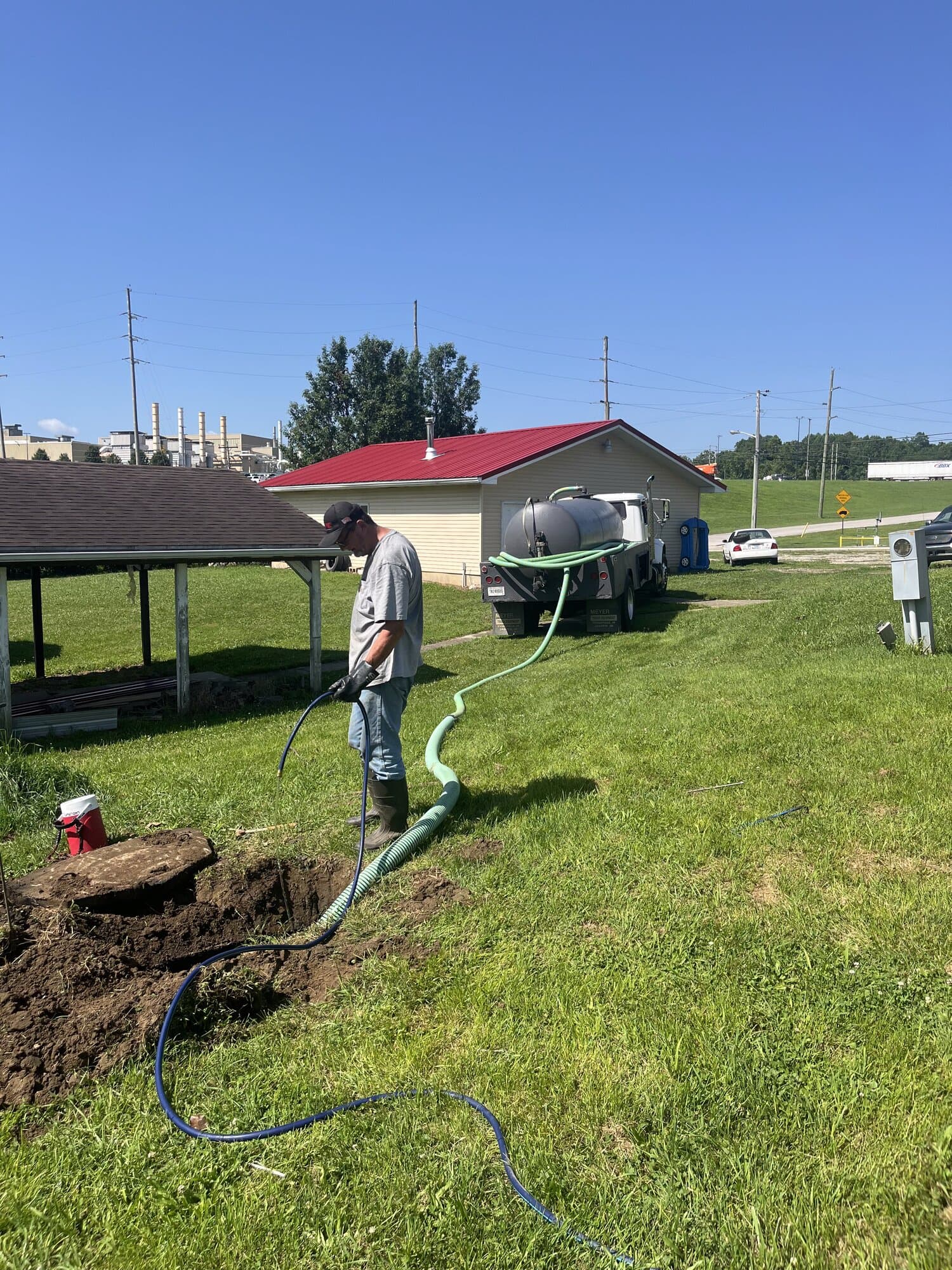
One of the most common calls we get starts the same way: someone needs a pump-out, and when we ask where the tank is, there is a long pause. They just bought the place, or they have lived there for years and it has never come up, and now nobody can point to the spot. If that is you, take a breath. You are not careless and you are not alone. Nobody hands you a map to your septic tank at closing, and out here in Southern Indiana plenty of tanks were buried fifty years ago by someone who never wrote anything down.
The good news is that a buried tank is very findable. A septic system leaves clues on the surface and a paper trail at the county, and between the two you can usually narrow a whole yard down to a strip the size of a pickup bed. In this guide we will walk through the clues you can spot yourself, the records worth a phone call, how deep the lid is likely to be, and what happens when we come out to locate a tank and dig down to the lid. It is the same process we use every week across Greene, Owen, Monroe, Lawrence, Martin, and Daviess counties, and it starts at just $50.
Why so many septic tanks go missing
A septic tank is designed to disappear. Once the lid is backfilled with a few inches of soil and the grass grows over it, there is often nothing on the surface to give it away. Add a couple of decades and the yard changes on top of it: a deck goes in, a garden bed moves, a driveway gets widened, topsoil gets spread before new seed. Every one of those projects buries the tank a little deeper in memory, and sometimes a little deeper in fact.
Property sales are where the trail usually goes cold. The original owner knew exactly where the tank was because they watched it go in. The second owner got a vague wave toward the back yard. By the third owner, the honest answer is a shrug. Older rural properties are the classic case: we regularly work on systems from the 1970s and earlier where there are no records, no riser, and no living person who has ever seen the lid.
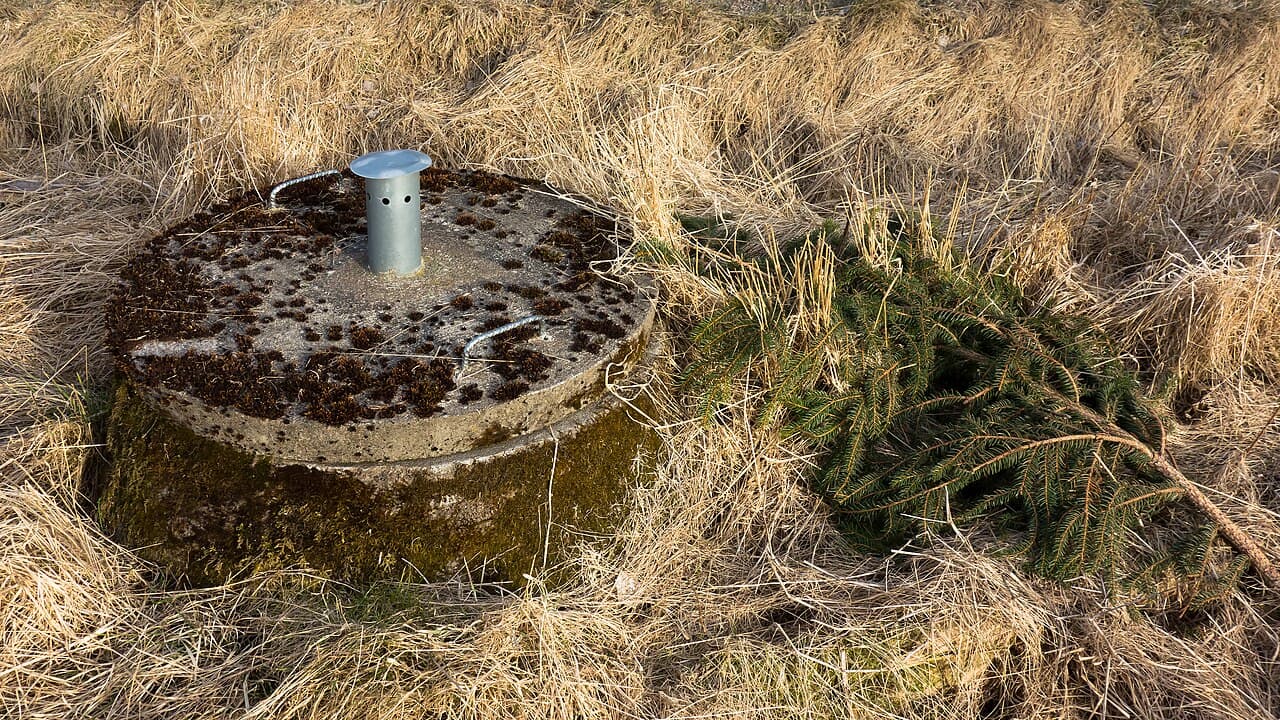
When the lid is visible at all, it is usually on an older system where the concrete sits a little proud of the ground, like the one below. If you have one of those, count yourself lucky and skip straight to booking the pump-out. The rest of this guide is for everyone else.
Read the yard: four clues that point to the tank
Your yard is already telling you where the tank is if you know what to look for. Start at the house. Find where the main sewer line leaves the building: in a home with a basement or crawl space, look for the large pipe heading out through the wall, and outside look for a capped white PVC pipe sticking a few inches out of the ground near the foundation. That cleanout cap sits on the sewer line itself, so it points like a compass needle toward the tank.
From there, walk outward. Most tanks sit ten to twenty-five feet from the foundation along that same line, on the downhill side if the yard has any slope. Now look at the grass. The soil over a tank and its drain field holds warmth and moisture differently than the ground around it, so the grass above often grows a shade greener and a step faster, especially in a dry August like the one we are in now. Finally, look for shallow dips. The soil over a buried lid settles over the years, leaving a saucer-sized depression or two in an otherwise flat lawn. Two soft dips a few feet apart, ten to twenty feet off the back wall, is about as close to an X on the map as a yard ever gives you.
One more trick for winter: after a light snow, the spot over the tank is often the first to melt. More than one customer has solved the mystery in January just by looking out the kitchen window.
Start at the cleanout cap, follow the line out 10 to 25 feet, and watch for greener grass and shallow dips. Together the clues usually narrow the search to a strip the size of a pickup bed.
Check the paper trail before you dig anything
Before anyone puts a shovel in the ground, spend twenty minutes on the paper trail, because it is free and it often ends the search on the spot. Your county health department is the first call. Septic systems in Indiana are permitted through the county, and many offices keep the original permit and a simple site sketch showing where the tank and drain field were installed. Give them your address and ask if they have a septic record on file. Some counties can email it the same day.
Next, dig out your home inspection or closing paperwork. If the home sold recently, there may be a septic inspection report with distances and a sketch. Previous owners, longtime neighbors, and even the company that pumped the tank last are all worth a call; haulers like us keep service records, and if we have pumped a tank before, we know exactly where the lid is.
No luck with records? That is common on older properties, and it is exactly what our locating service is for. Either way, resist the urge to start trench digging on a guess. We have seen homeowners spend a whole weekend opening holes across the yard, and the tank was under the third clue they walked past on Saturday morning.
How deep will the lid be?
Homeowners are usually surprised by this one: septic tanks are shallower than people think. A typical tank in our area sits with its lid somewhere between six and sixteen inches below the surface. That is shovel work, not excavator work. Older systems, or yards where fill dirt was spread over the years, can run deeper, occasionally two to four feet down, and that is when uncovering the lid becomes a real job.
If your system has a riser, there is nothing to dig at all: the lid is the green or black disc sitting right at grass level. That is the whole point of a riser, and it is why we recommend one to almost everyone who has just paid to have a deep lid dug up. Here is roughly what to expect by system type.
Most lids are within easy shovel depth. The deep ones are usually older systems or yards that had fill dirt spread over them, and they are the best candidates for a riser so nobody ever digs again.
Typical depth below the surface (inches)
What a locating and lid excavation visit looks like
When you book a tank locating visit, here is how it actually goes. We start with a short conversation and a walk of the property, reading the same clues described above plus a few that come from doing this every week: where systems of your home's era were usually placed, how the plumbing stacks up inside, where the ground feels different underfoot. Then we confirm the spot by probing, using a thin steel rod that finds the flat, hard shape of a buried tank without tearing up the lawn.
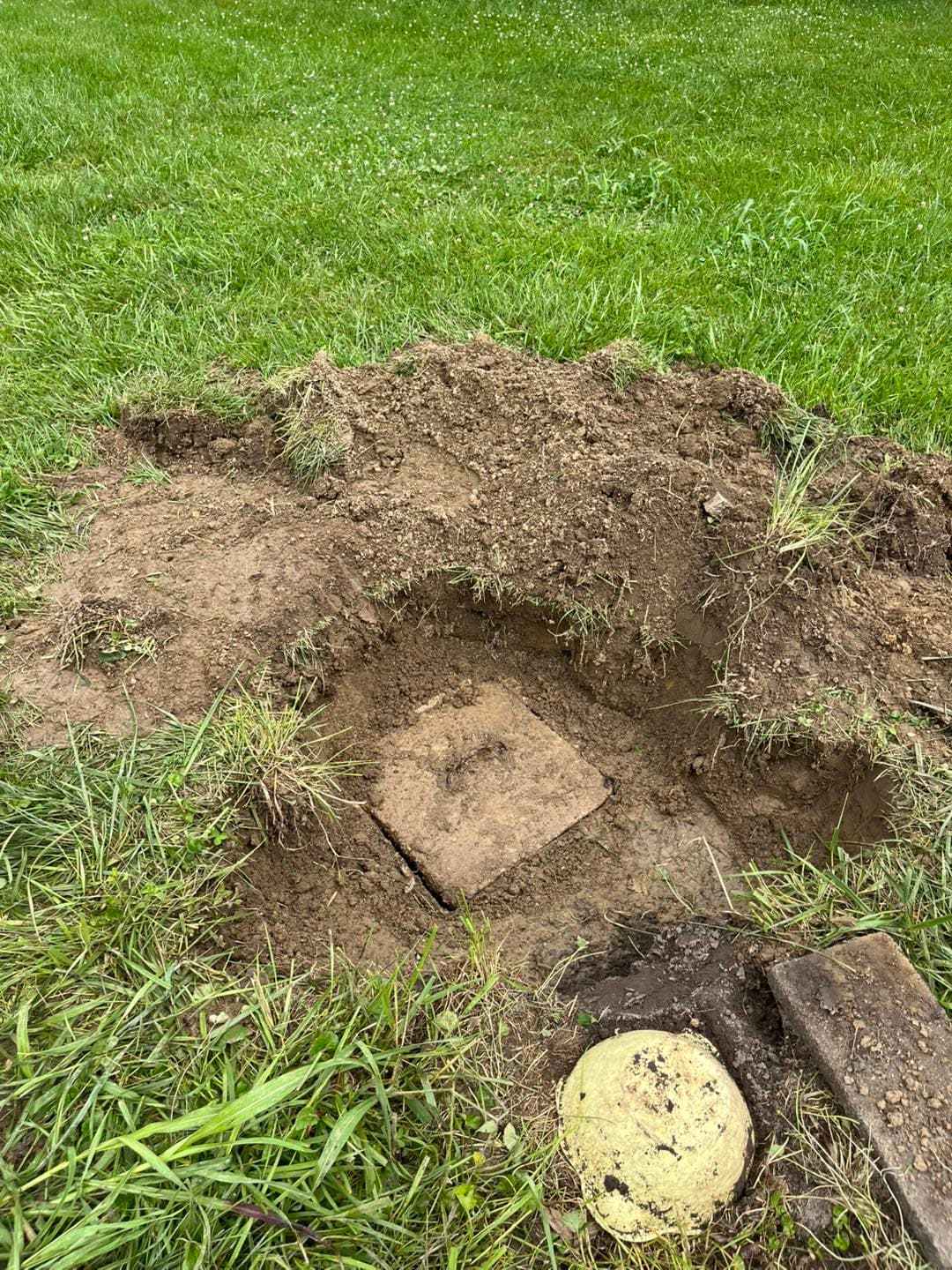
Once we hit the tank, we hand-dig a neat opening down to the lid, uncover it, and set it aside. From there you have options: most customers have us pump and inspect the tank while it is open, since the truck is already parked in the driveway and it saves a second trip charge. Before we backfill, we can mark the location permanently and record the measurements, so the next service visit drives straight to the spot. The whole visit is tidy, and the only evidence left behind is a small patch of fresh soil that grasses over in a few weeks.
Walk the property and read the clues
We follow the sewer line from the house, check slope, grass, and dips, and draw on decades of local experience with how systems were placed.
Probe to confirm the spot
A thin steel probe rod finds the flat top of the tank without tearing up the yard.
Hand-dig down to the lid
We open a neat hole over the access lid, usually six to sixteen inches down, and uncover it completely.
Pump and inspect while it is open
Most customers combine locating with a pump-out on the same visit, since the truck is already on site.
Mark it so nobody ever searches again
We can mark the location permanently, record the measurements, or install a riser that brings the lid to the surface for good.
A word of caution before you go treasure hunting
A couple of safety notes, because they matter more than people realize. If you do find your tank, never open the lid and lean in, and never, ever climb inside. The gases in a septic tank can overcome a healthy adult in seconds, and every year people are lost this way trying to retrieve a dropped phone or check a baffle. Opening and inspecting a tank is our job, with our equipment. There is no exception to this one.
Be careful with weight, too. Old concrete lids can crack under a riding mower, and you should never drive vehicles or park equipment over the tank or drain field while you are hunting. And if your search involves any real digging, call 811 first so the buried utility lines get marked. It is free, and it turns a nice Saturday project into a safe one.
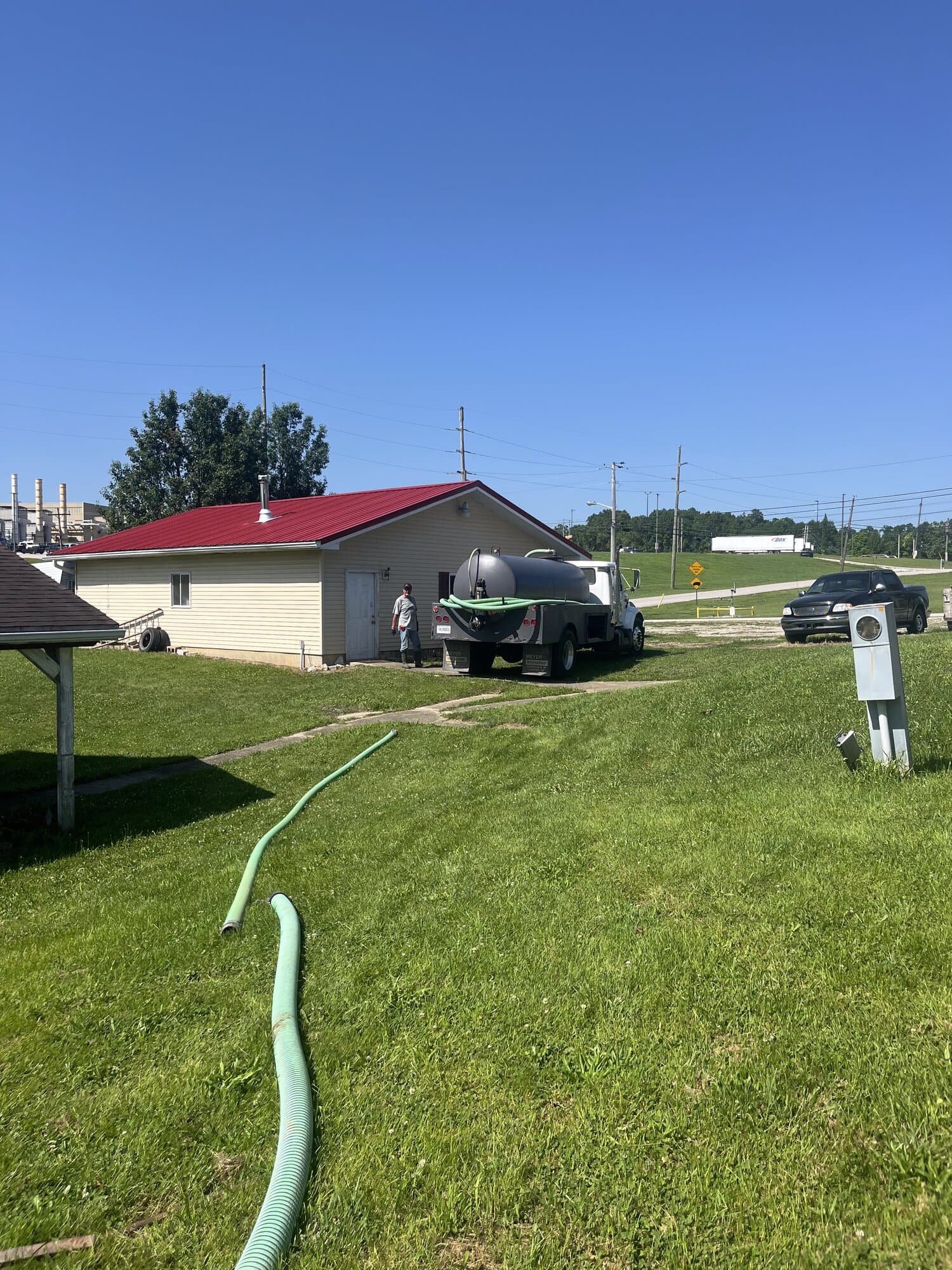
Find it once, and never lose it again
Here is the advice we give every customer standing next to a freshly uncovered lid: do not let the yard swallow it again. At minimum, measure from two corners of the house and write the distances somewhere that stays with the property. Better, have us mark the spot permanently. Best of all, add a riser, which brings the access up to grass level so every future pump-out starts in thirty seconds instead of with a shovel. Riser installation starts at $150, and it usually pays for itself in saved digging by the second service visit.
If your tank is still a mystery, we would love to solve it for you. Our tank locating and lid excavation service starts at just $50, it can be a standalone visit or an add-on to a pump-out, and it comes with the experience of a crew that has found tanks under gardens, gravel, and thirty years of guesswork across Southern Indiana. Call us at (812) 272-1803, tell us what you know about your system, even if the answer is nothing at all, and we will take it from there. Can't flush? Call us. Can't find it? Call us too.
Frequently Asked Questions
How can I find my septic tank myself for free?
Start with the paper trail: call your county health department and ask for the septic permit record for your address, and check your home inspection or closing documents for a septic report. Then read the yard: find the sewer cleanout near the foundation, walk 10 to 25 feet out along that line, and look for greener grass and shallow dips where the buried lids have settled. Those steps find a lot of tanks. If they do not find yours, our locating service starts at $50.
How much does it cost to have a septic tank located?
Our tank locating and lid excavation service starts at $50, with the final price depending on depth and difficulty. It can be a standalone visit or an add-on when you schedule a pump-out or cleaning, and most customers combine the two so the tank gets pumped while the lid is already uncovered.
How deep is a septic tank usually buried?
Shallower than most people expect. A typical lid sits six to sixteen inches below the surface, which is shovel depth. Older systems, or yards where fill dirt was added over the years, can run two to four feet down. If your system has a riser, the lid sits right at grass level and there is nothing to dig at all.
Can you find a septic tank with no records at all?
Yes, and we do it all the time. Between reading the property, knowing how systems of each era were placed in our counties, and confirming with a probe rod, we can find a tank even when there is no permit on file and no one alive who has seen the lid. Once we find it, we can mark it permanently so the search never has to happen again.
Should I install a riser after my tank is located?
If your lid is more than a few inches down, we think it is one of the best small investments you can make in your system. A riser brings the access up to grass level, so every future pump-out starts immediately instead of with digging charges. Installation starts at $150, and it typically pays for itself by the second service visit.
Ready to schedule service?