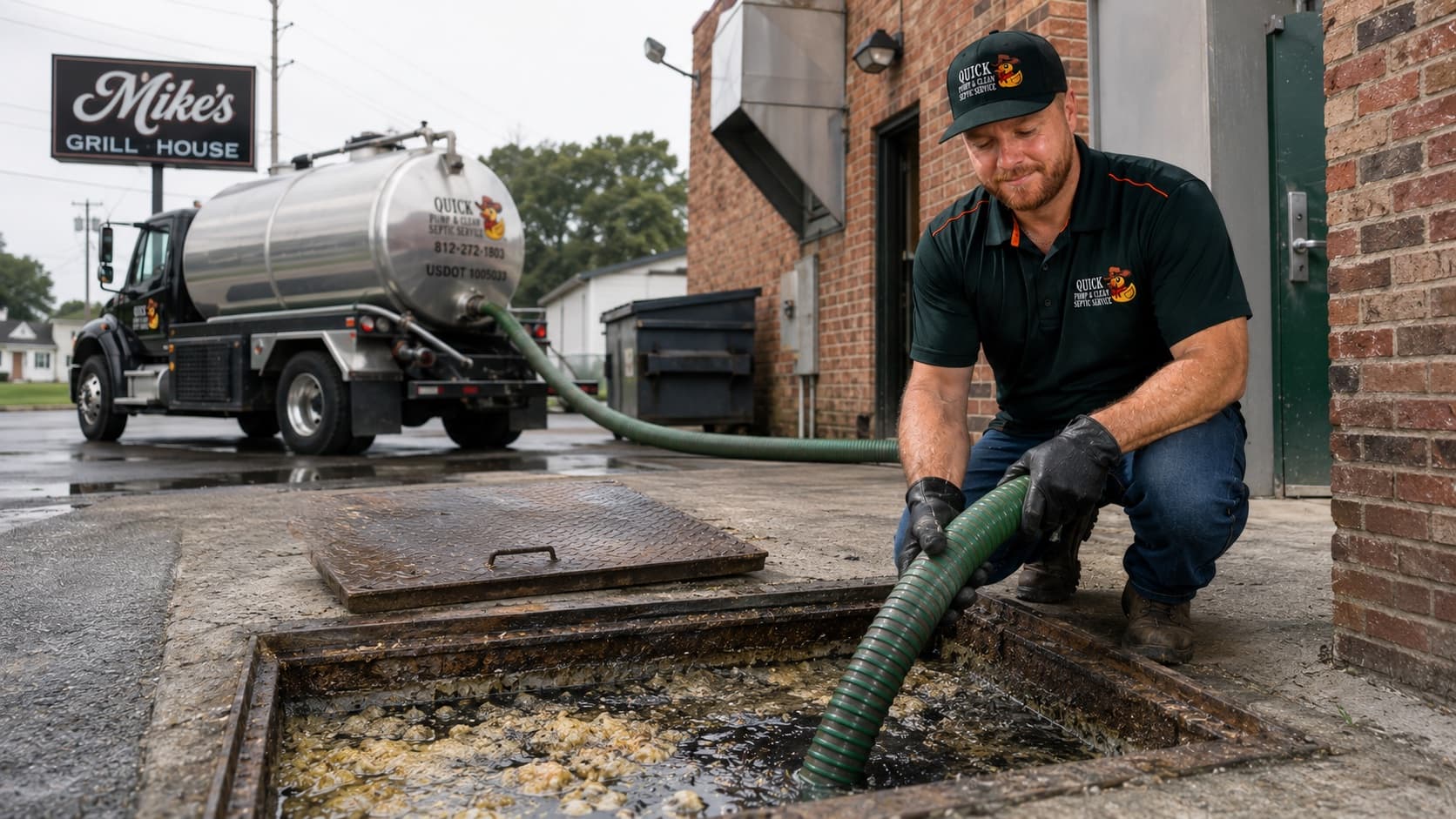
Commercial Grease Trap Cleaning and Pumping
Call for pricing
About This Service
Grease traps and grease interceptors are required for most commercial kitchens and food service operations to keep fats, oils, and grease (FOG) out of the sewer or septic system. Over time that FOG plus settled food solids fills the trap, and once it gets past about a quarter of the trap's capacity it stops working: drains slow, odors start, and eventually the line backs up mid-service. Quick Pump and Clean provides scheduled and on-call grease trap and interceptor pumping for restaurants, cafes, bars, cafeterias, schools, and other commercial food operations across Southern Indiana. We pump the trap, clean the interior, haul the waste to an approved disposal facility as a licensed Indiana hauler, and can provide documentation for your compliance records. Whether you run a small under-sink trap or a large in-ground grease interceptor, we bring the right equipment and can put you on a recurring maintenance schedule so you never have to remember to call.
What Is Included
- Grease trap and grease interceptor pumping
- Both under-sink traps and large in-ground interceptors
- Thorough trap interior cleaning and inspection
- Proper waste disposal at approved facilities (licensed Indiana hauler)
- Compliance documentation for health inspections
- Recurring maintenance plans: monthly, quarterly, or custom
- Restaurants, cafes, bars, schools, and food service operations
- Emergency grease trap service when a trap backs up
Built around a working kitchen
Serviced around your hours
We pump grease traps and interceptors overnight and in the early morning, before you open, so a truck never shows up in the middle of your dinner service. Tell us your slow days and your hours and we schedule around them.
Predictable, plan-based pricing
Most kitchens settle into a monthly or quarterly plan, and accounts on a schedule pay less per visit than one-off emergency calls. Give us your trap or interceptor size and your volume and we quote a flat per-visit price you can budget around. Call (812) 272-1803.
A compliance manifest for your inspection file
SampleEvery pump-out leaves with a waste manifest like this, so when the health inspector asks for your grease records you already have them.
- Generator (your kitchen)
- Business name and address
- Service date
- Date and time of pump-out
- Unit serviced
- Trap or interceptor size, gallons removed
- Hauler
- Quick Pump and Clean, registered Indiana septage hauler
- Disposal facility
- Approved facility where the waste is offloaded
- Signatures
- Technician and on-site staff
Pricing
Call for pricing
Pricing varies by trap size, location, and frequency. We offer scheduled maintenance plans (monthly, quarterly, or custom) for commercial accounts, plus one-time and emergency service.
Call (812) 272-1803What to Expect
Schedule Service
Call us to set up a one-time cleaning or establish a recurring maintenance schedule for your commercial kitchen.
Pump the Trap
We pump out all accumulated fats, oils, grease, and food solids from the trap.
Clean and Inspect
The trap interior is cleaned and inspected for damage, proper flow, and any maintenance issues.
Proper Disposal
All waste is transported to an approved disposal facility. We can provide documentation for your compliance records.
Frequently Asked Questions
How often should a grease trap be cleaned?
The standard guideline is to clean a trap before fats, oils, grease, and settled solids reach about 25 percent of its capacity. For most commercial kitchens that works out to every 1 to 3 months depending on cooking volume and trap size, and your local health code may set a required frequency. We can assess your trap and recommend an interval.
What is the difference between a grease trap and a grease interceptor?
They do the same job at different scales. A grease trap is the smaller under-sink or in-floor unit found in many kitchens. A grease interceptor is the larger in-ground tank used by higher-volume operations. We pump and clean both, so tell us what you have and we will bring the right equipment.
What happens if I do not clean my grease trap?
A full or neglected trap causes slow drains, foul sewer odors, health code violations and fines, and eventually a backup into the kitchen during service. Grease that escapes into the sewer or septic system can also cause expensive damage downstream. Regular cleaning avoids all of it.
Do you offer scheduled grease trap maintenance for businesses?
Yes. We set restaurants and commercial kitchens up on a recurring pumping schedule (monthly, quarterly, or a custom interval) so cleaning happens before it becomes a problem, and so you always have a service record on hand for health inspections.
How much does grease trap cleaning cost?
Pricing depends on the size of the trap or interceptor, how easy it is to access, and how often you have it serviced. Accounts on a regular maintenance schedule generally pay less per visit than one-off calls. Call us with your trap size and location and we will give you a clear quote.
Do you offer emergency grease trap pumping?
Yes. If a trap has backed up and is stopping your kitchen, call us and we will get out to you as quickly as we can to pump it and get your drains flowing again.
Need Grease Trap Cleaning?
Call now or schedule online. We serve businesses across Southern Indiana.