September 26, 2026 · 9 min read
Septic Repairs: What Can Be Fixed and What Needs Replacing

By Gregory Aliano
Owner, Quick Pump and Clean
When a septic system acts up, almost everyone's mind jumps straight to the worst case. A backup or a soggy patch in the yard feels like a five-figure disaster in the making, and the worry alone keeps people from picking up the phone, which usually makes things worse. So let me start with the part I tell every nervous homeowner over the tank lid: most septic problems are small repairs, and the frightening, expensive ones are the rare exception.
A septic system is really a handful of simple parts working together, and when something breaks, it is almost always one of those parts, not the whole system. This guide is a plain map of what actually gets repaired on a septic system, what each repair tends to cost, and how to tell a fix from a true replacement. The goal is to take the fear out of the number so you make the call before a small problem grows into a big one.
The good news: most septic problems are small repairs
It helps to picture the whole system laid out, because it shows just how many of the common failure points are minor and affordable. Wastewater leaves the house through a line, enters the tank past an inlet baffle, separates into layers, and the clarified liquid passes an outlet baffle and filter on its way to a distribution box and out to the drain field. Every one of those parts can need attention, and the map below flags them by how big a job each one usually is.
Look at the colors and you will see the pattern we see every week. Most of what goes wrong is green: a baffle, a filter, a lid, the kind of thing we fix in a single visit for a few hundred dollars or less. A couple are amber, moderate repairs. Only one, the drain field, is the major job, and it is the one you can protect against for the life of the system.
Most septic repairs are small, budget-friendly fixes. Green parts are routine, amber are moderate, and only the drain field in red is the major job, which is exactly why it is worth protecting.
The parts that usually just need a fix
The inlet and outlet baffles, sometimes called tees, are the most common repair we make, and one of the most important. They are the simple fittings that keep the scum layer from floating out to your drain field, and when one cracks or falls off, solids start heading somewhere they should never go. Replacing a baffle is a routine, budget-friendly job, and doing it protects the expensive field downstream.
The effluent filter is even simpler. It sits at the tank outlet and catches stray solids, and when it clogs it can slow or back up the system even when the tank is not especially full. Most of the time it just needs a rinse, which we do for free on every visit. A cracked lid or a missing riser is the same story: a small part, a routine fix, and a real safety improvement, because an open or broken lid is a hazard as much as a leak.
The line between the house and the tank is the last of the common ones. A clog, invading tree roots, or a collapsed section can back things up, and clearing or repairing that line is a moderate job, more involved than a baffle but a long way from a new system. The theme across all of these is the same: they are parts, and parts get fixed.
What a repair costs versus what a replacement costs
Numbers calm nerves better than reassurance does, so here is the honest picture. The chart below shows typical costs for the common septic repairs, from a free filter rinse up through a distribution box. Most of them land in the low hundreds, and even the more involved ones stay well under the cost of anything close to a replacement.
For contrast, a genuinely failed drain field or a full new system runs from about $8,000 into the tens of thousands, as we cover in our guide to what a new system costs. That gap is the whole point. The distance between a $300 repair and a $15,000 replacement is enormous, and the thing that keeps you on the cheap side of it is catching problems early and protecting the drain field, not waiting until a small issue takes the field down with it.
The everyday septic repairs, from a free filter rinse to a distribution box. Most land in the low hundreds, far below the cost of a failed drain field or a new system.
Typical repair cost (USD)
The one part worth protecting: your drain field
There is exactly one part of a septic system whose failure means big money, and that is the drain field. It is the network of buried lines that returns treated water to the soil, and when it is overwhelmed, it cannot be pumped clean or patched with a part. Replacing it is the expensive job everyone fears, and it is the one worth organizing your whole maintenance routine around avoiding.
Here is the reassuring twist: the field almost never fails on its own. It fails when solids escape the tank and clog the soil, and that happens when a tank goes too long without pumping or when a broken baffle lets sludge slip through. In other words, the cheap repairs and the regular pump-outs are exactly what protect the one part you cannot cheaply repair. Keep the small stuff maintained and the big stuff tends to take care of itself.
How we figure out which one it is
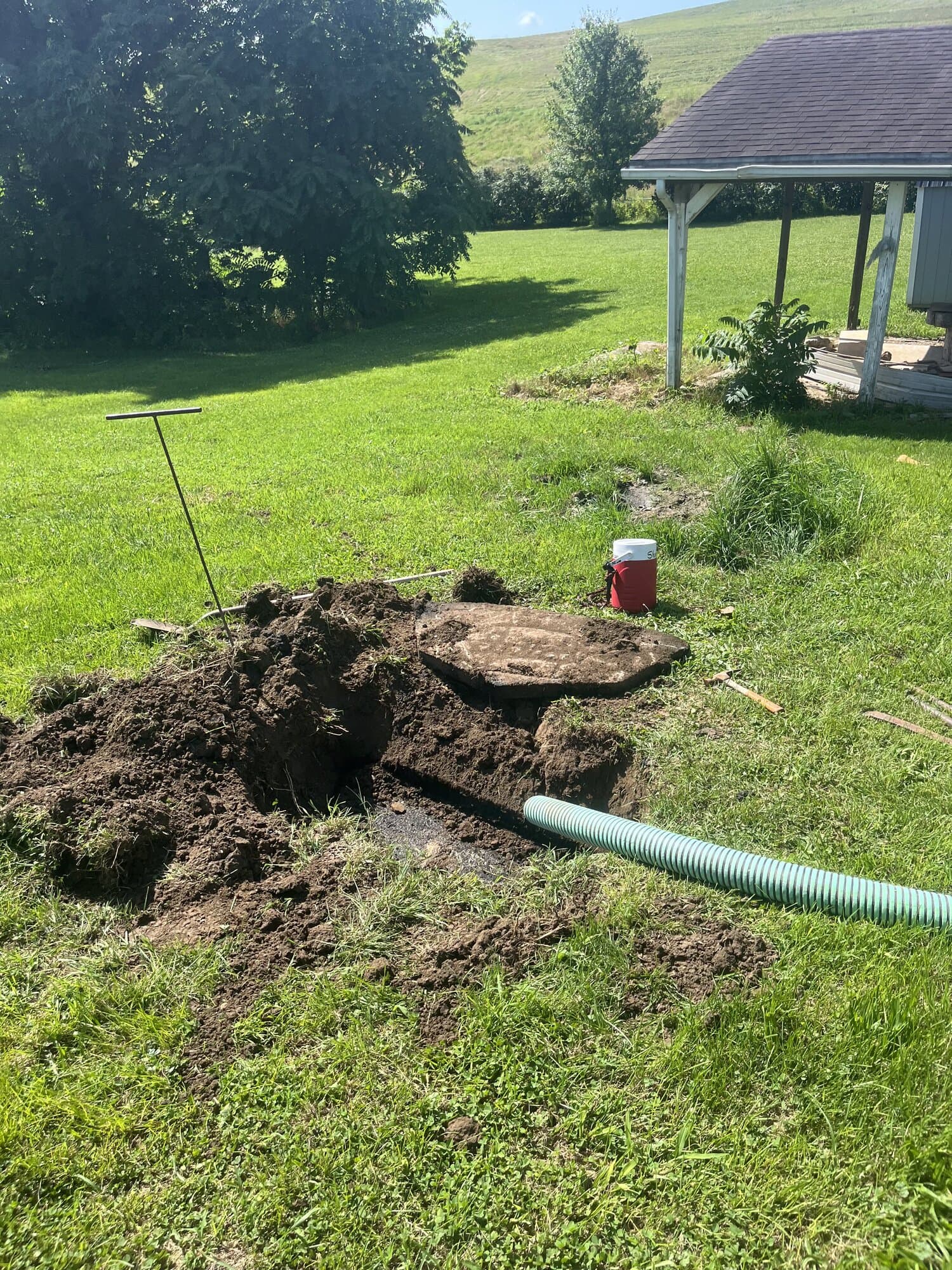
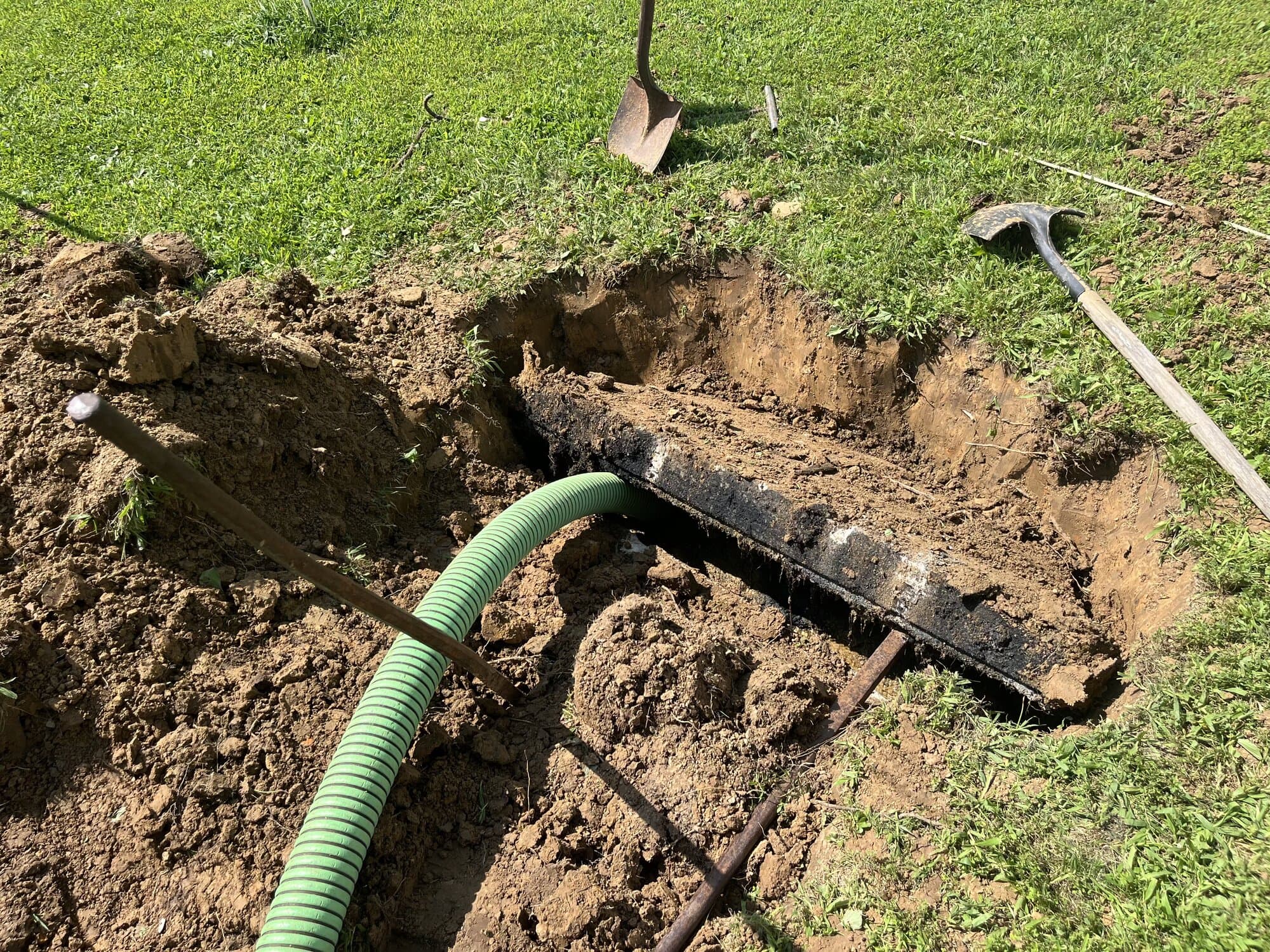
When you call us for a problem, we do not guess and we do not lead with the scary number. We locate and open the tank, and the moment the lid is off, most of the story is right there. A tank packed to the top tells us it was simply overdue. A high water level with a clean tank points us at the filter or the outlet. A tank that is not full at all sends us looking at the line or the field.
From there we check the baffles, rinse the filter, and run water to watch it move, so we can see what is actually flowing and what is not. Only then do we tell you what we found and what it will take to fix, with a clear price and no pressure. Most of the time the answer is one of the small repairs, and you are back in business the same day.
When repair is the answer, and when replacement is the honest call
The vast majority of the time, a septic problem is a repair, and we would rather do the honest small job than sell you a system you do not need. A cracked baffle, a clogged filter, a backed-up line, a failing lid: these are the everyday fixes, and they keep a good system running for years. We will always start there when the system can be saved.
There is a point where replacement becomes the honest call, and it is almost always a drain field that has genuinely failed after decades of service. When we reach it, we will tell you plainly, show you why, and give you a clear quote, and we will never use scare tactics to get there. But that is the rare end of the road, not the likely one.
If your septic is acting up, do not sit on it and do not assume the worst. We serve homeowners across Greene, Owen, Monroe, Lawrence, Martin, and Daviess counties in Southern Indiana. Call us at (812) 272-1803 and we will find out what is actually wrong, tell you straight, and fix what can be fixed. Can't flush? Call us.
Frequently Asked Questions
Is a septic problem usually a repair or a full replacement?
Almost always a repair. Most issues are a full tank or a single failed part, a baffle, a filter, a lid, or a blocked line, that we fix in a visit for a few hundred dollars or less. A full replacement is the rare exception, and it generally means a drain field that has genuinely failed after decades. We diagnose with the lid off before recommending anything.
What are the most common septic repairs?
Baffle or tee replacements are the most common and among the most important, because they keep solids out of your drain field. Close behind are effluent filter cleanings, which are often free, cracked lids and risers, and clearing or repairing the line between the house and the tank. All of these are routine or moderate jobs, not major ones.
How much do septic repairs typically cost?
Most common repairs land in the low hundreds. A baffle replacement often runs $150 to $400, a riser and sealed lid $150 to $500, and a line repair $300 to $1,200. An effluent filter rinse is free on our visits. Only a failed drain field or new system reaches the thousands, which is why catching problems early matters.
What is the most expensive part of a septic system to fix?
The drain field. It is the buried network that returns treated water to the soil, and when it fails it cannot be pumped clean or patched with a part, so it must be replaced. The good news is that it rarely fails on its own. Regular pumping and small repairs that keep solids out of the field are what protect it.
Can I keep a failing drain field from getting worse?
Sometimes, if you act early. Reducing water use, fixing any tank problems that let solids escape, and getting on a strict pumping schedule can take the load off a struggling field. But a field that has truly failed cannot be repaired, only replaced, which is why the goal is always to protect it before it reaches that point.
Should I wait and see, or call now?
Call now. Septic problems almost never improve on their own, and a small, cheap repair can turn into an expensive one if solids reach the drain field while you wait. Getting it looked at early is how you stay on the low-cost side of the repair range. We will tell you honestly what we find.
Ready to schedule service?