August 16, 2026 · 8 min read
Do Septic Tank Additives Actually Work? An Honest Answer

By Gregory Aliano
Owner, Quick Pump and Clean
Walk down the cleaning aisle of any hardware store and you will find a whole shelf devoted to saving your septic tank. Packets of enzymes, jugs of live bacteria, tablets you flush once a month, and the old-timer favorite of a cup of baker's yeast down the toilet. The labels make big promises: break down solids, prevent backups, restore your system, skip the pump-out. After decades of opening tanks across Southern Indiana, I get asked about these products almost as often as I get asked about pumping itself.
So here is the honest answer, the same one I would give a neighbor standing over an open lid. A septic additive will not hurt most systems, but it will not do the one thing that actually matters either, and a healthy tank does not need it in the first place. Save the money. Let me walk you through why, because once you understand what is really happening inside your tank, the whole shelf of bottles stops looking so tempting.
The short answer, and why it holds up
No, septic tank additives are not the maintenance shortcut the labels suggest. A well-kept tank already contains everything it needs to break down waste, and the part of the tank that additives claim to help is the part they cannot reach. The real work of keeping a system healthy comes down to two things: sensible habits and a pump-out on a reasonable schedule. Neither one comes in a bottle.
That does not mean the products are a scam in the legal sense. The bacteria and enzymes inside are real. The problem is that they are aimed at a problem your tank does not have, and they quietly leave the actual problem, the sludge on the bottom, exactly where it was. Understanding that one distinction is the whole article, so let me start with what your tank is already doing on its own.
Your tank already grows its own bacteria, for free
Here is the part the marketing hopes you never think about. A septic tank is a living thing. The bacteria that break down waste are not something you have to add, because they arrive with every single flush. Human waste is loaded with exactly the microbes a tank runs on, and your household restocks that supply many times a day without spending a dime.
A sealed septic tank is also the perfect home for those bacteria: warm, dark, and free of oxygen, which is precisely the environment they thrive in. Left alone, the colony settles in, multiplies, and gets to work around the clock. The one thing that genuinely wipes out that bacteria is pouring harsh chemicals down the drain, things like bleach in quantity, drain cleaners, paint, and solvents. Keep those out and your tank grows all the biology it will ever need. The steps below show how that free, self-renewing system works.
Every flush seeds it
Human waste already carries billions of the exact bacteria a septic tank runs on. Every day of normal household use restocks the supply at no cost to you.
The tank is their ideal home
Warm, dark, and free of oxygen, a sealed tank is the perfect environment for these microbes. They settle in and multiply on their own, no bottle required.
They digest solids around the clock
The colony breaks organic solids down into liquid and gas, day and night, keeping the middle of the tank clear so clarified water can flow out to the drain field.
What they cannot eat becomes sludge
Grit, grease, and inorganic bits that no microbe can digest drift to the bottom and stay there. This is the layer that slowly fills the tank, and no additive changes it.
A pump-out removes the sludge
The one job no bacteria and no product can do is haul that settled sludge out of the tank. That is what the pump truck is for, and it is the step that actually resets your system.
The yeast, the enzymes, and the bacteria in a bottle
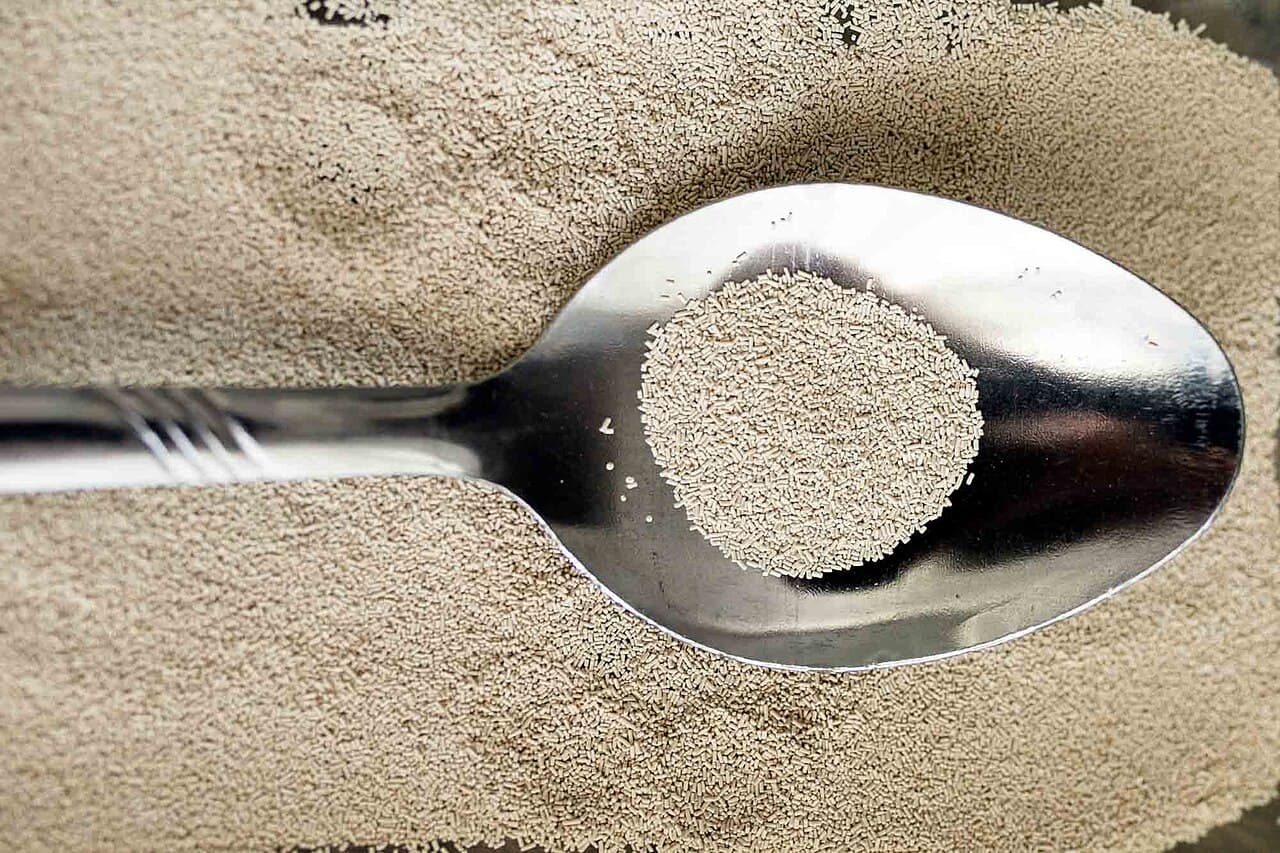
Most additives fall into three families, and it helps to know what each one is really claiming. The first is the home remedy: a cup of baker's yeast flushed down the toilet. Yeast is a fungus that ferments sugars, not the bacteria that digest sewage, and it does not survive or multiply in a septic tank the way the pantry legend promises. At best it passes through and does nothing. It is harmless, but it is not feeding your system.
The second family is enzymes, sold as packets or tablets. Enzymes can briefly speed the breakdown of certain solids near the top of the tank, but they do not reproduce, so whatever you add is used up quickly and the effect fades. The third family is live bacteria in a bottle, the priciest option. The catch is that your tank is already full of the same kind of bacteria, freshly resupplied every day, so adding more is like pouring a bucket of water into a full pond. In a normal working household, none of the three moves the needle on the thing that actually fills your tank.
The one job no additive can do
Everything comes back to the sludge layer. Over the years, the solids that bacteria cannot digest settle to the bottom of the tank and build up a little at a time. That layer is the reason a tank eventually needs pumping, and it is the exact thing every additive on the shelf is powerless to remove. You can pour in bacteria, enzymes, and yeast for a decade, and the sludge will sit there growing all the same. The only way it leaves the tank is up the hose of a pump truck.
This is where the money question gets interesting. Bought month after month, additives are not cheap, and over a few years they quietly add up to as much as the pump-out they were supposed to replace, sometimes more. The chart below lays out a typical five-year spend. The honest takeaway is simple: you can spend the same money on bottles that leave your sludge in place, or on the one service that actually hauls it out.
Bought regularly, additives cost about as much over five years as the pump-out they claim to replace, and they leave the sludge layer exactly where it was. Only a pump-out removes it.
Typical five-year spend in Southern Indiana (USD)
When an additive can actually cause harm
Most additives are harmless to the tank, which is why we say save your money rather than sound an alarm. But there is one category worth avoiding outright: the heavy-duty chemical or acid products marketed as sludge dissolvers or system openers. These are a different animal from the gentle enzyme packets, and they can do real damage.
The trouble is twofold. Strong chemicals can kill off the very bacteria colony that keeps your tank working, setting your system back instead of helping it. Worse, a product that claims to liquefy sludge does not make the solids disappear, it just stirs them up so they can wash out of the tank and straight into your drain field, which is the expensive part you cannot afford to clog. A chemical that promises to help you skip a pump-out is the one most likely to cost you a field repair. When a bottle sounds too aggressive to be true, leave it on the shelf.
What actually keeps a septic system healthy
If additives are not the answer, what is? The good news is that a healthy septic system asks very little of you, and none of it involves a shopping list. Be reasonable about what goes down the drain: keep grease, harsh chemicals, wipes, and anything that does not break down out of the system. Spread out heavy water use like back-to-back loads of laundry so the tank has time to do its job. Protect the drain field from vehicles and standing water. That is most of it.
And then, on a sensible schedule, have the tank pumped. For most households that is every three to five years, though the right interval depends on your tank size and how many people live under the roof. Pumping is the one habit that truly protects the system, because it removes the sludge that nothing else can. Everything the additive aisle promises, a pump-out delivers for real, and it comes with a set of eyes on your baffles and filter while the lid is open.
Where we come in
So the next time you are standing in the hardware store weighing a jug of septic treatment, here is my advice: put it back and put the money toward a pump-out instead. Your tank already grows the bacteria it needs, the additive cannot touch the sludge that actually fills the tank, and a routine pumping does the whole job at once. That is not us talking down a product to sell a service. It is the same thing I tell friends and family who ask.
When your tank is due, or if you honestly have no idea how full it is or when it was last pumped, we are glad to come take a look. We locate the tank, pump it clean, check the inlet and outlet baffles, rinse your effluent filter for free, and give you a straight recommendation on how often to come back based on your real household. No upsell, no bottle of magic, just the one service that keeps a septic system healthy.
We serve Greene, Owen, Monroe, Lawrence, Martin, and Daviess counties across Southern Indiana. Call us at (812) 272-1803 and we will bring the truck out, take a look, and keep your system running the way it should for years to come.
Frequently Asked Questions
Do septic tank additives really work?
Not in the way the labels suggest. A healthy tank already grows all the bacteria it needs from everyday household use, and additives cannot remove the sludge layer that actually fills a tank. The products are mostly harmless, but they are not a substitute for pumping. The two things that genuinely keep a system healthy are sensible habits and a pump-out on a reasonable schedule.
Does flushing yeast help a septic tank?
No. Baker's yeast is a fungus that ferments sugar, not the kind of bacteria that digest sewage, and it does not survive or multiply in a septic tank the way the old home remedy claims. It will not hurt anything, but it is not feeding your system or doing any real work. Your tank is already restocked with the right bacteria every time someone uses the bathroom.
Can I use additives instead of pumping my tank?
No product can replace a pump-out. Additives, at best, work on solids the bacteria are already handling near the top of the tank. They cannot remove the sludge that settles to the bottom and slowly fills the tank, and that sludge is the entire reason a tank needs pumping. Skipping pump-outs in favor of additives is how solids eventually escape to the drain field, which is the costly repair you want to avoid.
Are any septic additives harmful?
Most enzyme and bacteria products are harmless to the tank. The ones to avoid are the strong chemical or acid treatments sold as sludge dissolvers or system openers. Those can kill the helpful bacteria in your tank and can stir settled solids loose so they wash into the drain field. If a product promises to let you skip pumping by dissolving sludge, that is the one most likely to cause an expensive problem.
How often should I actually pump my septic tank?
For most households in our area, every three to five years is the right range, with the exact interval depending on your tank size and how many people live in the home. Pumping is the one habit that truly protects the system because it removes the sludge nothing else can. When we pump, we also check the baffles and rinse your effluent filter for free, and we will recommend a schedule that fits your household. Call us at (812) 272-1803.
Ready to schedule service?