October 10, 2026 · 8 min read
Septic Pumping vs. Cleaning: What Is the Difference?

By Luke Aliano
Co-Owner, Quick Pump and Clean
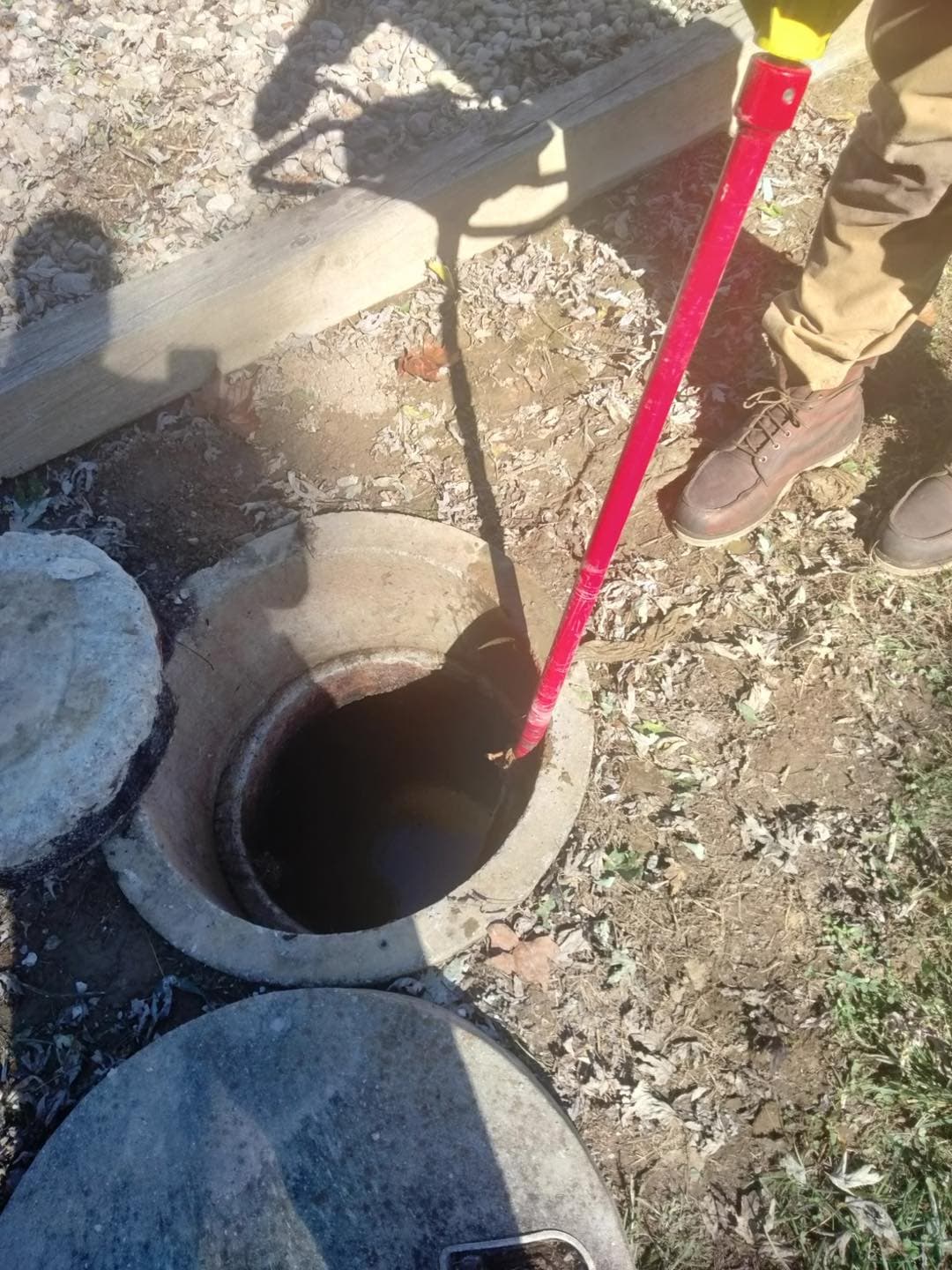
Ask five people what the difference is between having a septic tank pumped and having it cleaned, and you will get five answers, most of them a shrug. It is one of those distinctions that does not matter at all until it suddenly does, usually on a tank that has gone a good while without service and still seems to act full a few months after a pump-out.
So let me clear it up the way I would over an open lid. Pumping and cleaning are not opposites, and for a well-kept tank they amount to the same thing. But there is a real difference in what each one removes, and knowing it can save you from paying to pump a tank that needed something a little more. This is the companion to our crud busting guide: that one goes deep on the tool we use to break up hardened sludge, and this one is about the plain question of pumping versus cleaning and which one your tank actually needs.
Two words people use as if they were the same
Part of the confusion is that the industry itself uses the words loosely. Plenty of honest companies say pumping when they mean a thorough job, and plenty say cleaning when all they do is pump. We would rather be precise, because the difference is where people occasionally feel shortchanged, through no bad intent on anyone's part.
Here is the simple version. Pumping empties the tank. Cleaning empties the tank and removes the stubborn material that pumping alone leaves behind. On most tanks kept on a normal schedule, those come out to the same result, because there is nothing stubborn left to remove. The gap only opens up on a tank that has gone years too long, where the sludge on the bottom has packed down hard.
What a pump-out actually does
When we pump a tank, we drop our hose in and draw out the liquid and the solids that are loose enough to move with it. On a healthy tank, that is essentially everything: the floating scum, the liquid in the middle, and the sludge on the bottom that is still soft. You end up with an empty, working tank, and that is exactly what a routine pump-out is supposed to do.
A pump-out is the workhorse service and the one most homes need most of the time. It is what we recommend on a 3 to 5 year schedule, it is what clears the great majority of backups, and it is what keeps solids from ever building to the point where anything more is needed. For a tank that has been maintained, pumping and cleaning are the same visit.
What a full cleaning adds
Now picture a tank that has not been touched in ten or fifteen years. The sludge on the bottom has not stayed soft. It has compacted into a dense layer, almost like packed clay, and a standard pump hose cannot pull it up any more than a straw can pull up peanut butter. We can empty all the liquid and still leave a hardened crust behind, which is why some folks feel their tank fills up again far too fast after a pump-out.
That is where cleaning comes in. A full cleaning means agitating the tank to break that packed material loose, usually with the mixing tool we use for crud busting, and then pumping out what a plain visit would have left. The diagram below shows the difference between a tank right after a routine pump-out and the same tank after a full cleaning.
A pump-out empties the tank of liquid and loose solids. A full cleaning also lifts the hardened sludge and scum a pump cannot reach, so the tank starts fresh instead of acting full again in a few months.
How to tell which one your tank needs
The honest answer is that you often cannot tell from above ground, and neither can we until the lid is off. That is fine, because we check for it every time. When we open your tank, we can see and measure the layers, and the sludge tells the story: soft and loose means a pump-out is all you need, packed and hardened means a cleaning is worth it.
The chart below shows the difference in plain terms for a neglected tank. On a tank kept on schedule, a pump-out removes essentially everything and there is no reason to pay for more. On a tank that went years too long, a pump-out alone leaves the hardened layer, and adding a cleaning is what finally gets it all. We will always tell you honestly which one you are looking at, and we will never sell you a cleaning a healthy tank does not need.
On a tank kept on a normal schedule, a pump-out removes essentially everything. This is the tank that went years too long, where the sludge has hardened and a cleaning is what lifts the rest.
Share of the built-up solids removed
What we do on a visit, and what it costs
When you call us out, the visit starts the same either way. We locate and open the tank, measure the sludge and scum, and pump it out. If the tank is healthy, that is the whole job, at our standard pumping rate, and you are done. If we find hardened sludge that a pump cannot lift, we will show you and explain that a cleaning would finish the job right.
Our crud busting add-on, which is the agitation that turns a pump-out into a true cleaning, starts at $75 on top of the pump-out, and we only recommend it when your tank actually needs it. While we are in there, we also check the inlet and outlet baffles and rinse your effluent filter for free. You get a tank that is genuinely empty, not one that just looks empty from the top.
We serve homeowners across Greene, Owen, Monroe, Lawrence, Martin, and Daviess counties in Southern Indiana. If your tank still seems full after a pump, or it has simply been a very long time, call us at (812) 272-1803 and we will give you a straight read on whether you need a pump, a cleaning, or nothing at all just yet.
Frequently Asked Questions
Is there really a difference between pumping and cleaning?
For a tank kept on a normal schedule, no, they come out to the same thing, because a pump-out removes everything. The difference only shows up on a tank that went years too long, where the sludge has hardened into a layer a pump hose cannot lift. There, cleaning means agitating that material loose and pumping out what a plain visit leaves behind.
Why does my tank seem full again so soon after a pump-out?
The most common reason is hardened sludge that a standard pump could not pull up, so the tank was never truly emptied. A full cleaning that agitates and removes that packed layer usually fixes it. When we pump you, we measure the layers so we can tell you whether that is what happened.
Do I always need a cleaning instead of just a pump-out?
No, and we will not sell you one you do not need. Most tanks on a regular schedule only need a pump-out. A cleaning is worth it on a neglected tank with hardened sludge. We check every time we open a tank and tell you honestly which one you are looking at.
How much does a cleaning cost compared to pumping?
A standard pump-out starts at $300 for a typical 1,000 gallon tank. Our crud busting add-on, the agitation that turns a pump-out into a true cleaning, starts at $75 on top of that, and we only recommend it when the tank needs it. You get an honest look at your layers before anything is added.
How often should a tank be cleaned rather than pumped?
If you stay on a 3 to 5 year pumping schedule, you may never need a full cleaning, because the sludge never gets the chance to harden. Cleaning tends to matter for tanks that have gone a decade or more without service. Regular pumping is the habit that keeps a cleaning from ever being necessary.
Will a cleaning hurt the good bacteria in my tank?
No. We leave a little liquid behind to restart the biology, and your household refills the tank with the bacteria it needs within days of normal use. You do not need to add anything. The bacteria come back on their own, working in a tank that finally has room to do its job.
Ready to schedule service?