July 7, 2026 · 8 min read
Is a Septic Riser Worth It? The Real Payback on Never Digging for Your Tank Again

By Luke Aliano
Co-Owner, Quick Pump and Clean
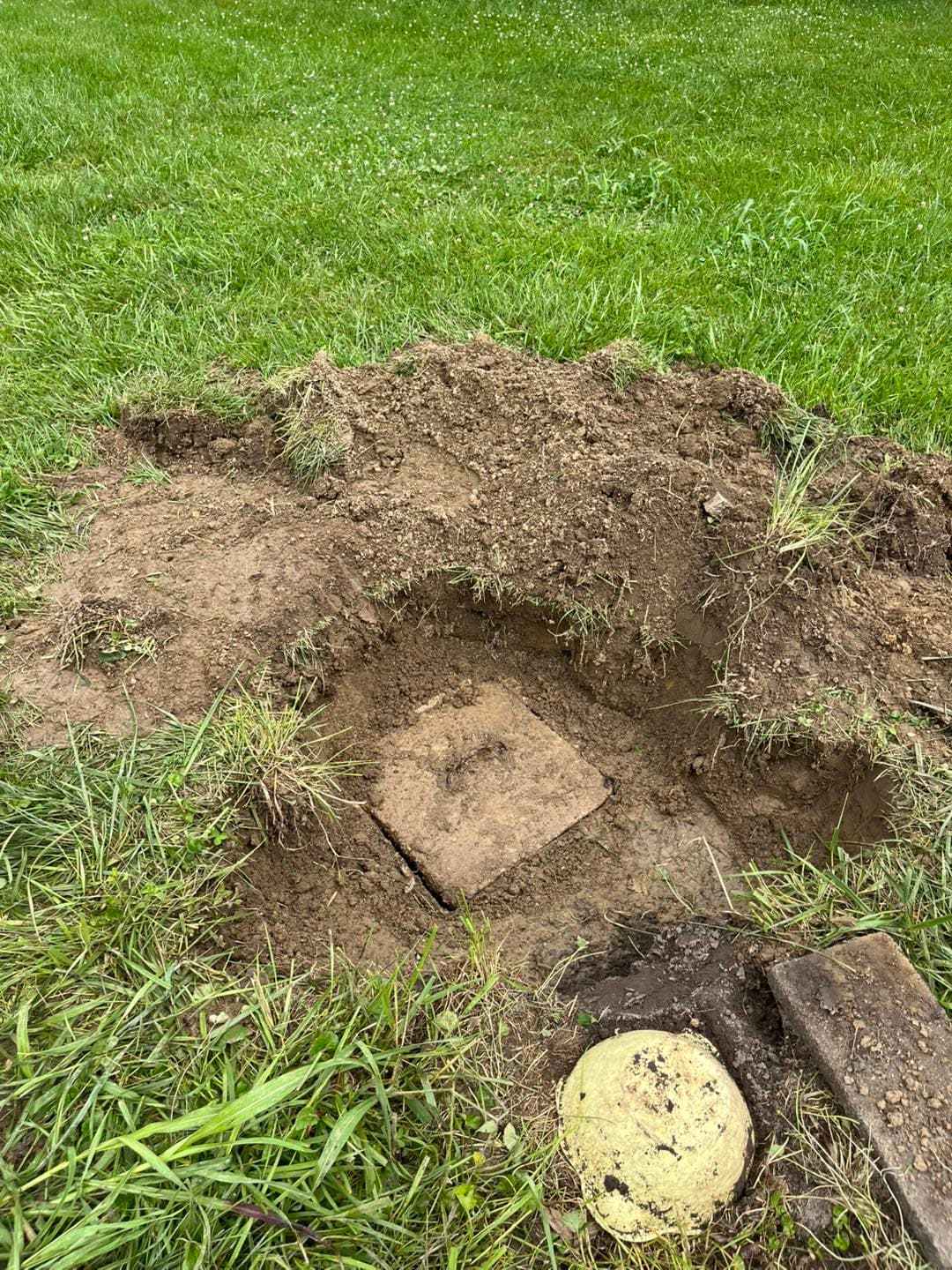
We show up to a lot of yards where the homeowner points somewhere in the general direction of the septic tank and says, "it's out there, somewhere." Landscaping changes, grass grows back over the top, and a lid that was easy to find the day it was buried turns into a small excavation project five years later. It happens on almost every older rural property we service.
A riser fixes that permanently. It is a simple piece of hardware, a vertical extension that brings your tank's access lid up to ground level and keeps it there, capped and visible, instead of buried under six or eight inches of dirt and sod. In this guide we will walk through what a riser actually costs, what digging up a buried lid costs you instead, and the point where installing one stops being an upgrade and starts being the cheaper option.
What a riser actually is
A septic riser is a rigid plastic (or sometimes concrete) tube that sits directly on top of your tank's access opening and extends up through the soil to sit flush with, or just above, your lawn. A secure, lockable lid caps the top. That is the whole idea: instead of the tank's real access port sitting buried under a foot of dirt, it is right there at the surface where anyone can find it.
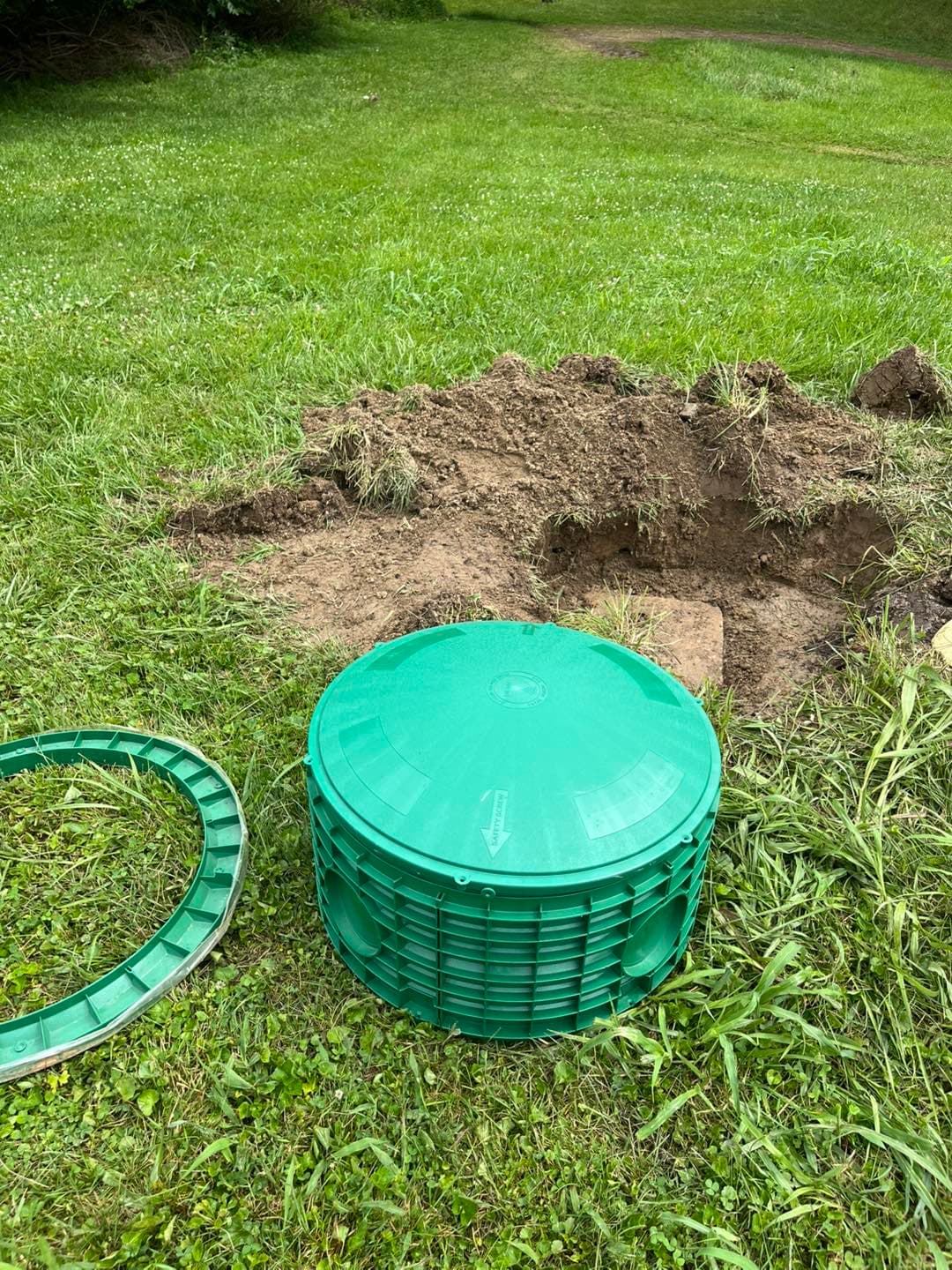
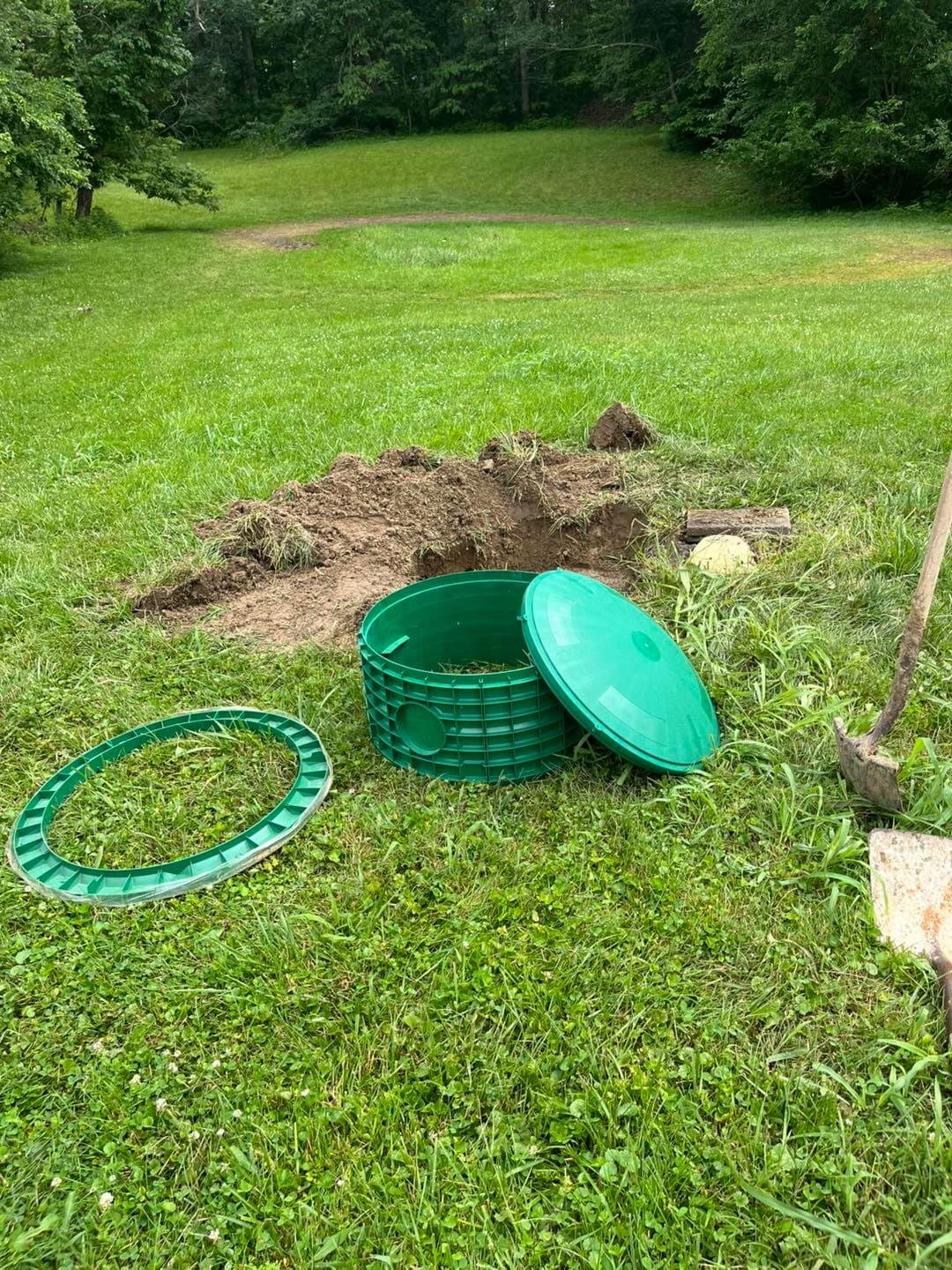
The photo here is a riser and extension ring from one of our jobs, staged next to the hole we dug to expose the original buried lid. Once we set the riser over that opening, backfill around it, and cap it, that hole never has to be dug again. Every future pump-out starts with popping the lid instead of grabbing a shovel.
The real cost of a buried lid, pump-out after pump-out
Here is the part most homeowners never sit down and add up. If your lid is buried, locating and excavating it is a small additional fee on top of your pump-out, typically in the $50 to $100 range depending on how deep it is and how much digging is involved. That is not a one-time cost. It is a cost you pay every single time the truck comes out, because the dirt goes right back on top when the visit is done.
A riser installation, by comparison, starts at $150 and is a one-time job. The chart below lays the two paths side by side over a typical 15-year stretch, three pump-outs at the standard three-to-five-year interval. By the second buried-lid dig, you have already spent more finding your tank than a riser would have cost outright, and every visit after that keeps adding to the buried-lid total while the riser cost stays exactly where it started.
Three pump-outs over 15 years. Excavation fees repeat every visit; a riser is paid once and never again.
Cost of tank access (USD, excludes the pump-out itself)
Not just about money
The dollars make a clean argument on their own, but the other benefits are worth just as much to a lot of our customers. A riser means no more guessing where the lid is when you need service in a hurry, which matters a great deal if you are dealing with a backup and want the truck working the moment it arrives instead of digging first.
It is also safer and kinder to your yard. A buried lid under a few inches of sod is easy for a mower, a tractor, or a kid running around the yard to come down on wrong, especially if the soil has settled unevenly over the years. A riser with a secure, lockable lid sits flush and visible, so there is no mystery soft spot to avoid mowing over. And in winter, a lid at ground level is far easier to find and clear than one buried under frozen soil, which we covered in our winter care guide.
It also simply saves time on the day of service. Every minute our crew spends locating and digging is time that is not spent on the actual pump-out, and on a cold or rainy day, that difference is more than convenience.
Is a riser right for your tank?
Most residential tanks are good candidates, whether the tank itself is concrete or plastic. The main variable is depth. A tank buried close to the surface may only need a short riser and extension ring, while a deeply buried tank needs a taller stack, which is why pricing starts at $150 and can move up based on depth and site conditions. We will always give you the real number for your specific tank before we start.
The best time to install one is during a pump-out that already requires digging up the lid. Since the hole is already open, adding a riser at that point avoids a second excavation down the road entirely. If you know your lid is buried and you have a pump-out coming up, mention it when you book and we can plan to install a riser in the same visit.
Where we come in
We install durable risers with secure, lockable lids that blend into the yard instead of standing out as an eyesore. It is a straightforward job for us, usually done in the same visit as a scheduled pump-out, and it is the kind of small upgrade that quietly makes every future service call faster, cheaper, and less of a hassle.
If you are tired of watching someone dig around your yard every few years trying to find a lid, or if you simply do not know where your tank access is right now, give us a call. We serve Greene, Owen, Monroe, Lawrence, Martin, and Daviess counties, and we are happy to take a look and tell you honestly whether a riser makes sense for your situation.
Frequently Asked Questions
How much does a septic riser installation cost?
With Quick Pump and Clean, riser installation starts at $150 for a standard plastic riser. The final price depends on how deep your tank is buried and site conditions, and we always confirm the number before starting work.
Does installing a riser damage my tank or void anything?
No. A riser is a standard accessory that sits over your tank's existing access opening; it does not alter the tank itself. It is a common, well-established upgrade on both concrete and plastic tanks.
Can I get a riser installed at the same time as a pump-out?
Yes, and that is usually the smartest time to do it. If your lid is already being dug up for a scheduled pump-out, adding a riser in that same visit means that hole never has to be dug again.
Ready to schedule service?