June 30, 2026 · 9 min read
Buying or Selling a Home With a Septic System in Southern Indiana? Read This First

By Luke Aliano
Co-Owner, Quick Pump and Clean

Out here in Southern Indiana, a huge share of the homes that change hands are on septic rather than city sewer. And when a deal falls apart at the last minute, the septic system is one of the most common reasons. A buyer gets nervous about a soggy spot in the yard, an inspection turns up a tank nobody has touched in fifteen years, and suddenly a smooth closing turns into a tense renegotiation or a dead deal.
It does not have to go that way. Whether you are listing a home or about to make an offer on one, understanding the septic system before you sign is one of the most valuable things you can do. In this guide we will walk through exactly what a septic inspection covers, who typically pays for it, the difference it makes to handle it early, and how to keep the tank from becoming the thing that costs you the sale.
Why the tank can quietly stall a sale
Here is the uncomfortable truth most people only learn the hard way: the buyer's lender and the buyer's inspector both care about the septic system, even when the buyer does not think to ask. A failing or badly neglected system can hold up financing, trigger a demand for repairs before closing, or send a nervous buyer walking. The system that has been invisible for years suddenly becomes the centerpiece of the negotiation.
The good news is that the cost of getting ahead of it is tiny compared to the cost of getting surprised by it. A routine pump-out and inspection is a few hundred dollars. A price concession at the closing table, demanded once an inspection turns up trouble, is usually far more, because the buyer is negotiating from fear rather than facts. And a genuine drain field failure discovered after the deal is the most expensive outcome of all. The chart below shows how those three paths compare.
Representative figures for Southern Indiana. Handling the system early is almost always the cheapest path through a sale.
Approximate cost (USD)
What a septic inspection actually checks
A real septic inspection is a great deal more than someone glancing at the yard and nodding. When we inspect a system as part of a sale, we are answering one question for everyone at the table: is this system healthy, and how much life is left in it? That answer comes from a specific set of checks, not a guess.
We locate and open the tank, measure how deep the sludge and scum layers have grown, look hard at the inlet and outlet baffles that keep solids out of the drain field, check the effluent filter, run water to watch how the system handles flow, and walk the drain field looking for any sign that effluent is surfacing instead of soaking in. The checklist below is the heart of it. Each line is a place where a problem, caught now, is far cheaper than the same problem caught after closing.
The core checks that turn a guess about the system into a documented answer both sides can trust.
First, someone has to find the tank
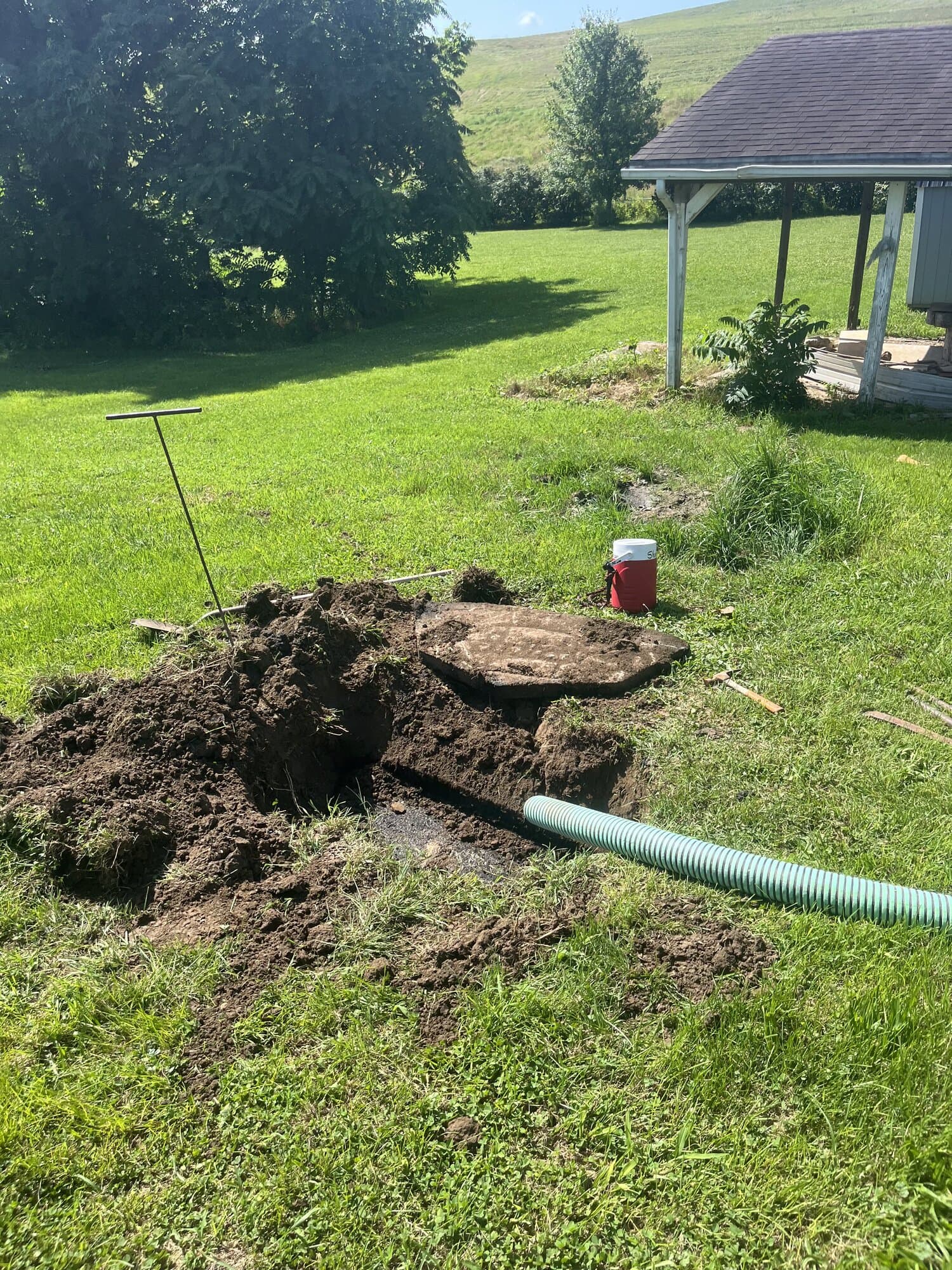
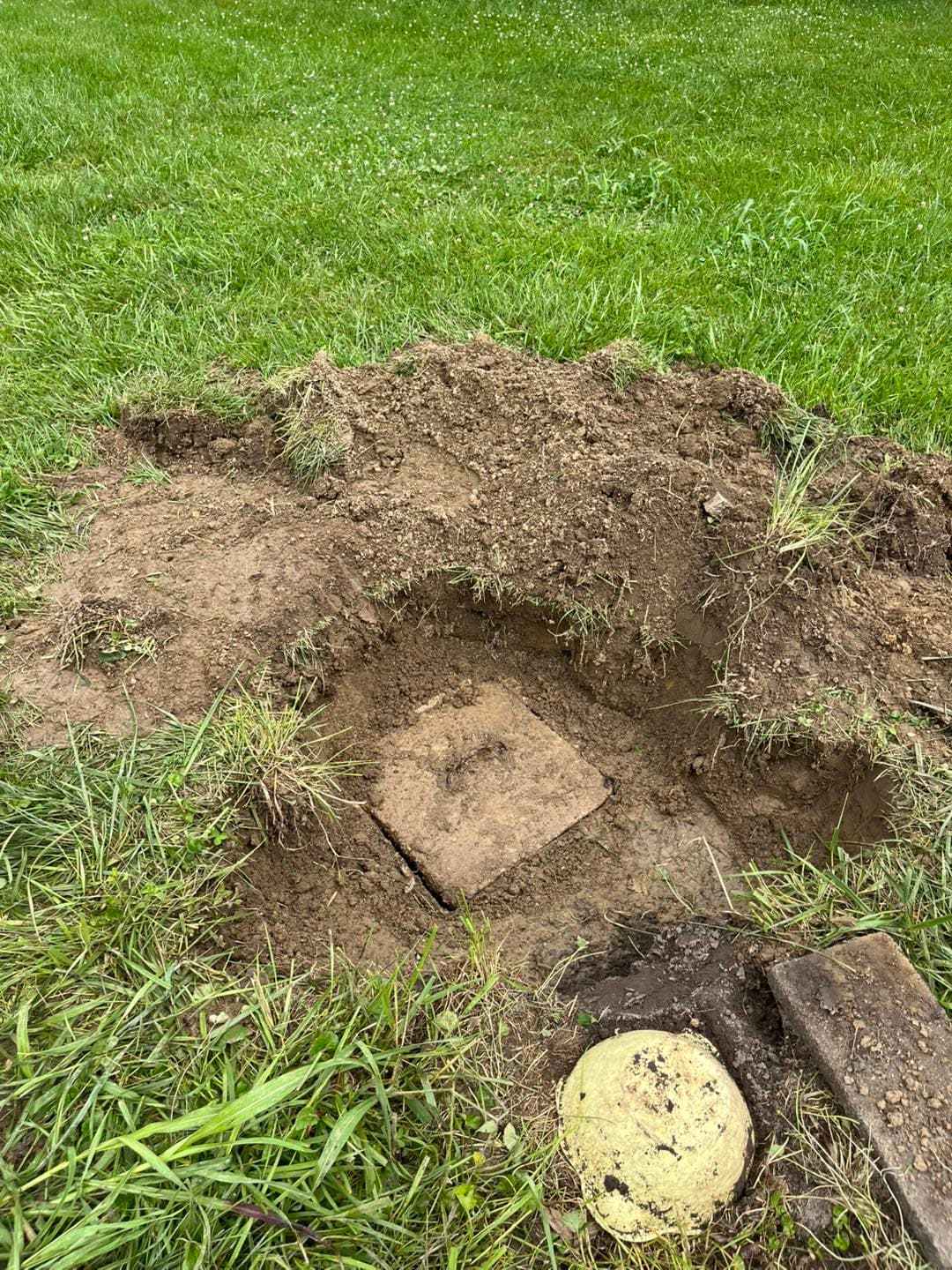
On rural Southern Indiana properties, the single most common surprise is not a failed system at all. It is that nobody knows where the tank is. Lids get buried over the years as landscaping changes, gardens move, and grass grows over everything. We have stood in plenty of yards where the homeowner was certain the tank was on the wrong side of the house entirely.
This matters at sale time because an inspection cannot happen until the tank is found and opened. If you are selling, knowing exactly where your lids are, and having them accessible, removes a real source of delay and cost from the transaction. If a lid is buried, locating and uncovering it is a small, predictable job, and it is far better to handle it on your own schedule than in a scramble two days before the inspection deadline.
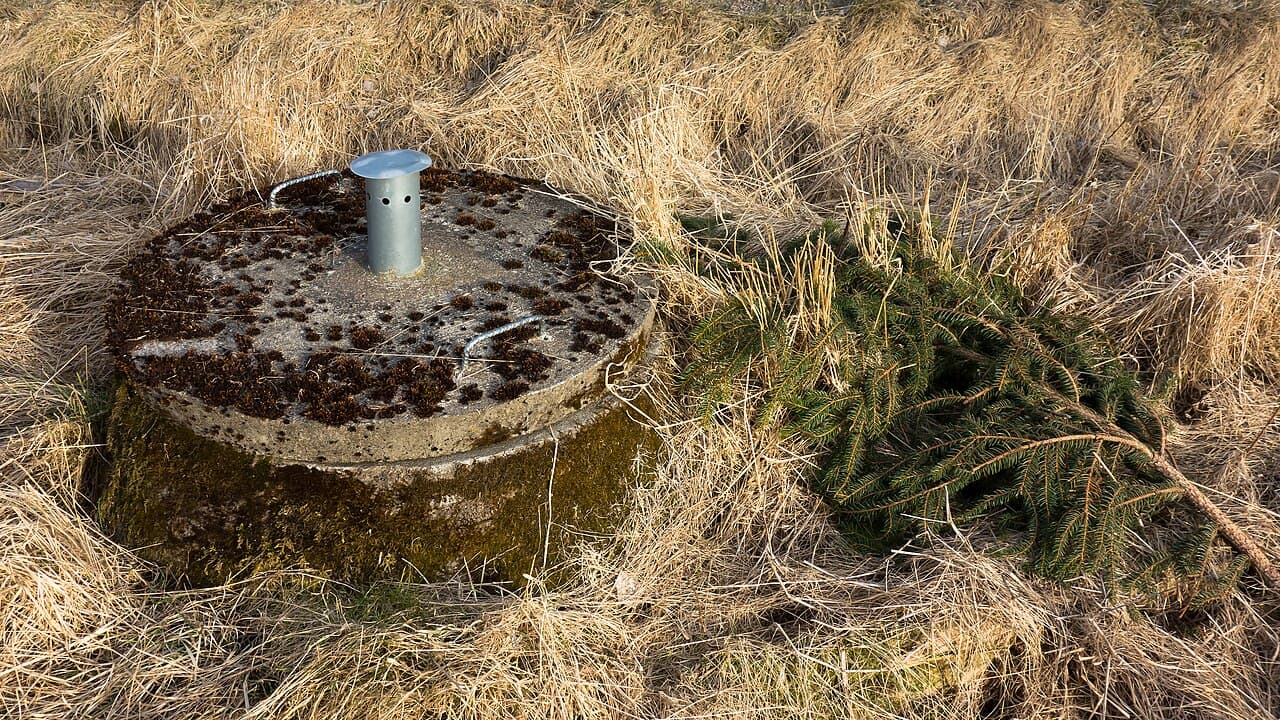
The photo here shows a typical rural tank lid, riser and vent poking up out of an overgrown field. This is exactly the kind of access point that is easy to lose track of, and exactly what an inspection has to reach before any real assessment can begin.
Selling? Get ahead of it with a pre-listing inspection
If you are the seller, the smartest move is to inspect and service the system before you list, not after an offer comes in. When you do it early, you are in control. You learn what shape the system is in, you fix anything small while it is still small, and you walk into negotiations with a clean, recent service record in hand. That record does quiet, powerful work: it tells the buyer they are not inheriting a mystery.
When you wait until the buyer's inspector finds a problem, you lose that control. Now you are reacting, on a deadline, with a buyer who is suddenly imagining the worst. The same issue that would have cost a few hundred dollars to handle calmly in advance can cost thousands in concessions once it surfaces under pressure. The path below is the one we would walk a neighbor through if they were getting ready to list.
Before you list: locate the lids
Find and uncover the tank access so an inspection can happen without delay. Buried lids get handled on your schedule, not the buyer's.
Pump and inspect
A pump-out and full inspection tells you the true condition of the tank, baffles, and drain field before anyone else looks.
Fix small things while they are small
A worn baffle or a dirty filter is cheap now. The same finding mid-negotiation becomes a bargaining chip against you.
List with a recent service record
A documented, recent pump-out reassures buyers and lenders and takes the septic system off the table as a source of fear.
Buying? Make the septic part of your due diligence
If you are the buyer, do not let the septic system be an afterthought. A general home inspector will look at the house, but a septic system is a specialized world of its own, and the most expensive part of it sits underground where no one can see it. Before you remove your inspection contingency, you want a real septic inspection from someone who pumps and services these systems for a living.
Ask for the system's service history and the tank size, find out roughly when it was last pumped, and have the tank opened and measured rather than relying on a clean-looking yard. A drain field that is starting to fail can look perfectly fine on a dry week and then surface effluent after the first heavy rain. The few hundred dollars an inspection costs is the cheapest insurance you will ever buy against walking into a five-figure repair as a brand-new homeowner.
And if the inspection does turn something up, that is not automatically a reason to walk away. It is information. A tank that needs pumping or a filter that needs replacing is routine and inexpensive. Knowing the difference between a small maintenance item and a genuine drain field problem is exactly what a real inspection gives you, and it puts you in a position to negotiate from facts instead of fear.
Where we come in
Whether you are listing your home or buying one, we are glad to be the straight, second set of eyes on the system. We pump, inspect, locate buried lids, and give you an honest read on what shape the septic is in and what, if anything, it needs. No scare tactics, no padded findings, just the same answer we would give a neighbor standing over an open tank lid.
We work across Greene, Owen, Monroe, Lawrence, Martin, and Daviess counties, and we are happy to coordinate around the timelines a real estate transaction runs on. If you have a closing date bearing down and need an inspection or a pump-out scheduled, reach out early and we will help you keep the septic system off your list of worries.
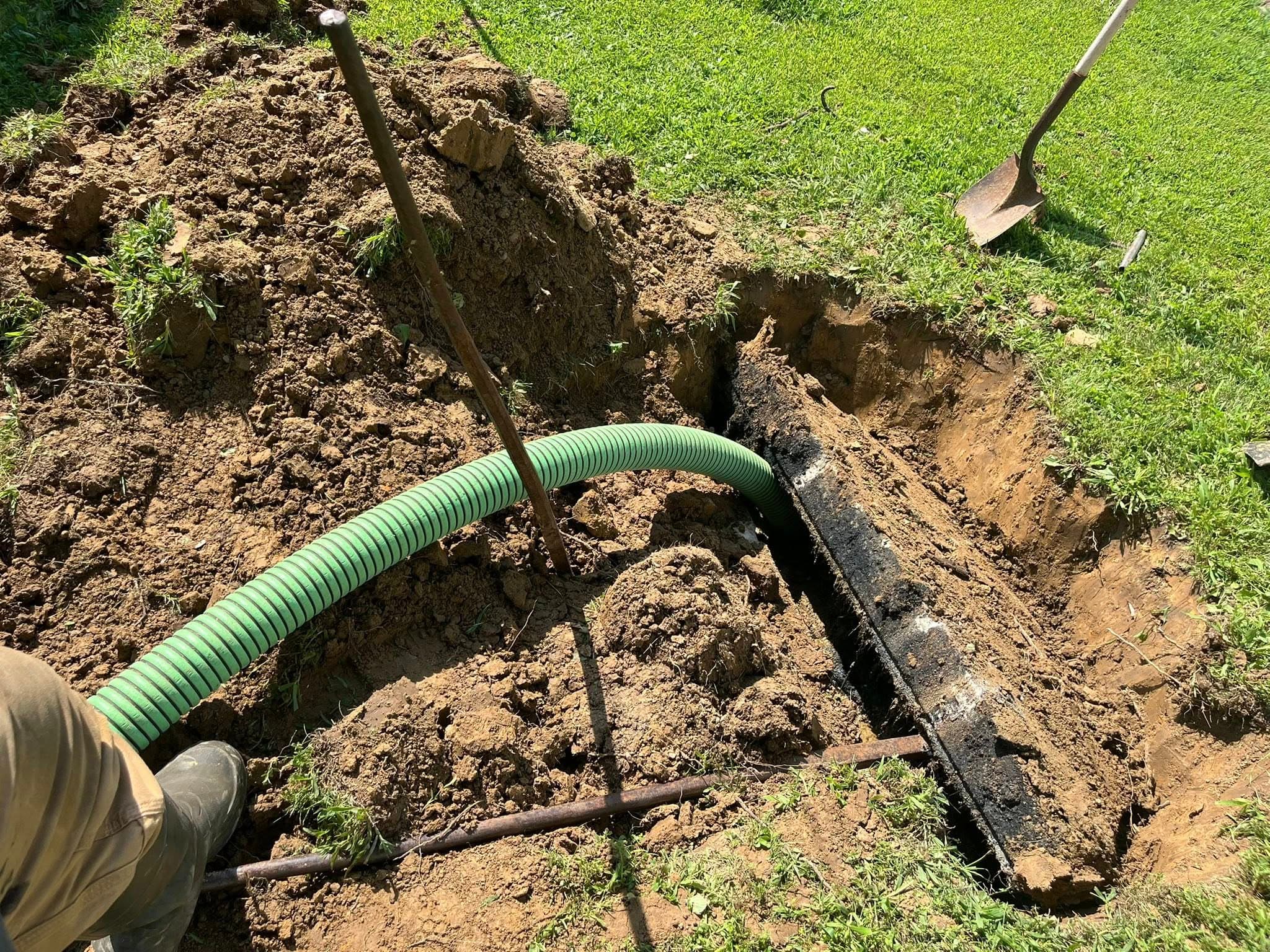
The photo here is a routine pre-sale pump-out, the kind of quiet, uneventful visit that lets a home change hands without the tank ever becoming a problem. That is the goal: a system nobody has to think about, on either side of the sale.
Frequently Asked Questions
Do you need a septic inspection to sell a house in Indiana?
Requirements vary by county and by the buyer's lender, and some loan types and local health departments do require a septic inspection before a sale can close. Even when it is not strictly required, a pre-listing pump-out and inspection is strongly recommended, because it heads off renegotiations and gives buyers and lenders confidence in the system.
Who pays for the septic inspection, the buyer or the seller?
It is negotiable and varies by deal. Buyers often pay for their own inspection as part of due diligence, while sellers increasingly pay for a pre-listing inspection to get ahead of problems and strengthen their position. Either way, the cost is small compared to the price concessions a surprise finding can trigger at closing.
How long does a septic inspection take?
For a typical residential system with an accessible tank, the inspection and pump-out usually take well under an hour. The main variable is access. If the tank lid is buried and has to be located and uncovered first, that adds some time, which is why finding the lids before listing is so helpful.
Ready to schedule service?