June 23, 2026 · 9 min read
How a Septic System Actually Works: A Homeowner's Guide

By Luke Aliano
Co-Owner, Quick Pump and Clean
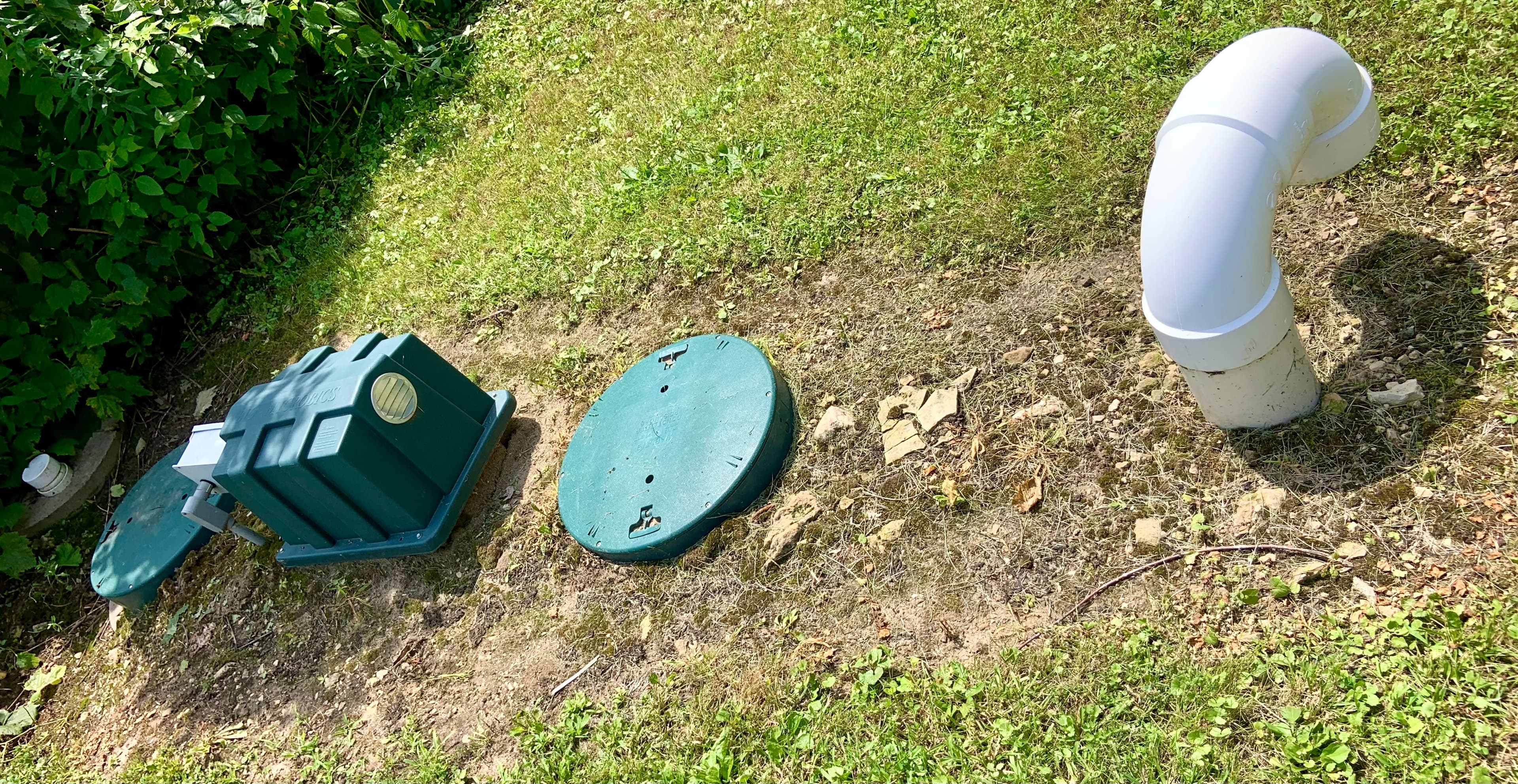
Here is something a little strange to think about: roughly one in five American homes treats its own household wastewater right on the property, and most of the people living in those homes have no idea how it happens. They flush, the water disappears, and life goes on. That is actually a sign the system is working. A healthy septic system is supposed to be invisible.
But invisible is not the same as magical. Buried a few feet under your yard is a genuinely clever piece of engineering, a self-contained treatment plant that uses nothing but gravity, time, and bacteria to turn what leaves your house into clean water that soaks safely back into the ground. Once you understand how the pieces fit together, every maintenance recommendation we make stops sounding like a sales pitch and starts sounding like plain common sense. So let us walk through the whole thing, step by step.
The big picture: a treatment plant in your backyard
A septic system has two main parts that do all the work, plus the pipes that connect them. The first part is the septic tank, a large watertight container, usually concrete, that sits buried near the house. The second is the drain field, also called a leach field, which is a network of perforated pipes laid in gravel-filled trenches a little farther out in the yard.
Everything that goes down a drain in your home, every flush, shower, load of laundry, and sink full of dishwater, flows through a single pipe into the tank. The tank separates and begins breaking down the waste. The liquid that comes out the other side then travels to the drain field, where the soil itself does the final stage of cleaning. No pumps, no electricity, no chemicals are required for a conventional system. Just gravity pulling water downhill and nature doing the rest.
The cutaway below shows how the whole system fits together underground. Keep it in mind as we look at each stage, because almost every septic problem we are ever called out to fix is really a story about one of these parts not being able to do its job.
Wastewater flows by gravity from the house into the tank, where solids settle out. The clarified liquid flows on to the drain field and filters down through the soil.
Stage one: the tank does the heavy lifting
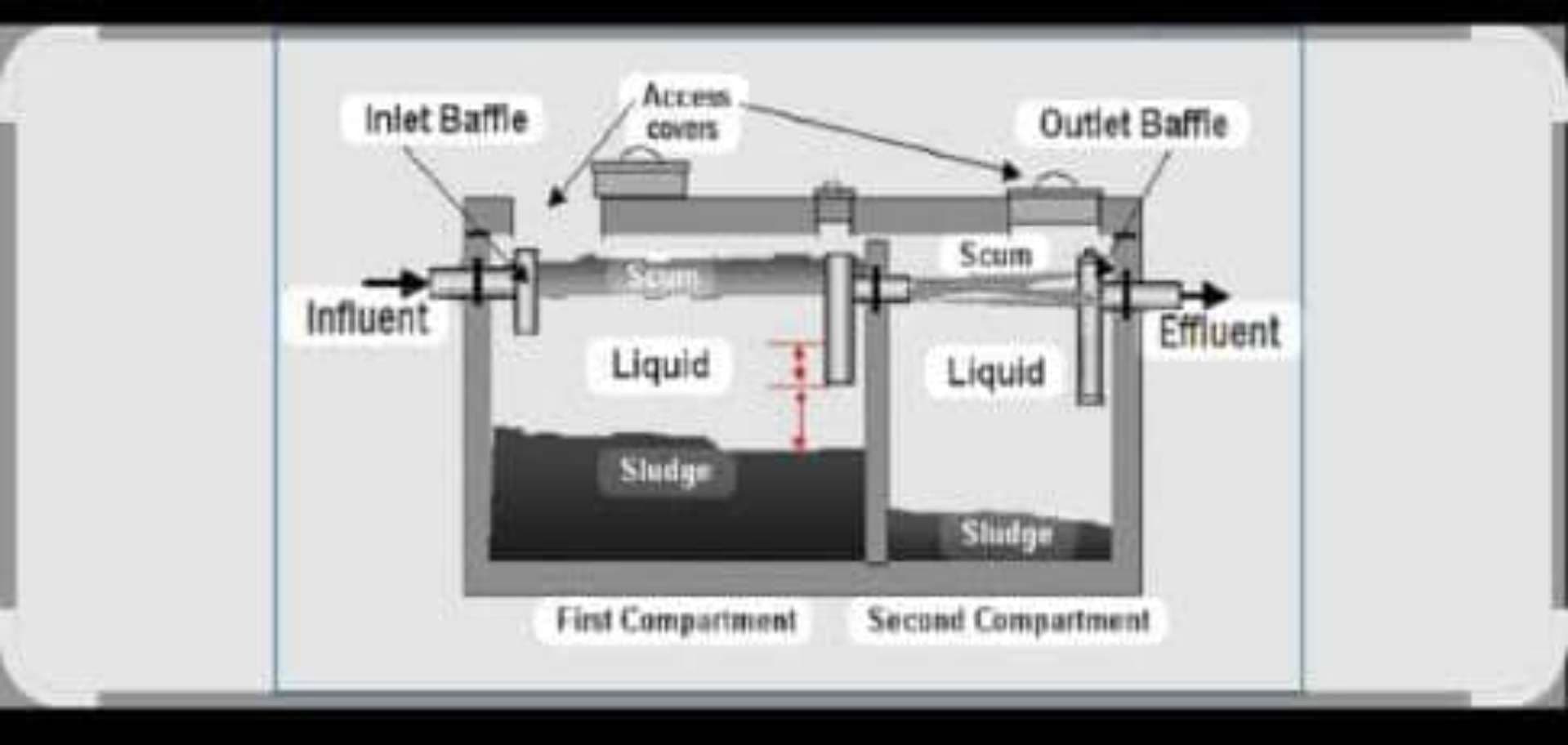
When wastewater enters the tank, it slows down and sits still, and that stillness is the whole point. Given a day or two of calm, gravity sorts the contents into three distinct layers. The heavy solids, the things that do not dissolve, sink to the bottom and form a layer we call sludge. The lighter material, mainly fats, oils, and grease, floats to the top and forms a crust we call scum. In the middle, between those two layers, sits relatively clear liquid.
While this settling happens, a population of naturally occurring anaerobic bacteria gets to work. These microbes live without oxygen and slowly digest the organic solids, breaking them down and reducing their volume. This is why a tank does not fill up as fast as you might expect from the sheer amount of water a household uses. The bacteria are constantly shrinking the sludge layer from within. They never quite keep up completely, though, which is the reason a tank still needs to be pumped on a schedule.
Two simple fixtures called baffles, or sometimes tees, guard the tank's inlet and outlet. The inlet baffle directs incoming water downward so it does not disturb the floating scum, and the outlet baffle reaches down into that clear middle layer to make sure only the cleanest liquid leaves the tank. The real photo here shows a typical tank layout, with the inlet and outlet on opposite ends so water has the longest possible path to settle along the way.
What is actually flowing into your tank
It helps to picture what the tank is being asked to handle every day. The average person uses somewhere around 60 to 70 gallons of water indoors per day, and where that water comes from tells you a lot about why some habits are harder on a septic system than others. Toilets and showers are the biggest contributors, followed closely by faucets and laundry.
The chart below breaks down a typical household's indoor water use. Two things are worth noticing. First, hidden leaks account for a surprising share, and a single running toilet can quietly flood your tank with hundreds of extra gallons a day, accelerating everything and pushing solids toward the drain field. Second, every one of these sources sends its water to the same tank, which is why spreading heavy use out across the week, rather than running five loads of laundry on one Saturday, gives the system the calm settling time it depends on.
Approximate share of average indoor water use by source. Figures based on national U.S. water-use estimates and will vary by household.
Share of indoor water use (%)
Stage two: the drain field finishes the job
The liquid that leaves the tank, called effluent, is clarified but not yet clean. It still carries dissolved nutrients and bacteria, and it cannot simply be released. This is where the drain field comes in, and it is the unsung hero of the whole system.
Effluent flows from the tank, sometimes through a small distribution box that splits it evenly, into the perforated pipes buried in the gravel trenches of the drain field. From there it seeps out slowly and trickles down through the soil. That soil is not just dirt in the way. It is a living filter. As the effluent percolates downward, beneficial organisms in the soil consume the remaining bacteria and nutrients, and by the time the water reaches the groundwater far below, it has been thoroughly cleaned. It is a beautifully low-tech process, and it works extraordinarily well, as long as the soil stays open and able to absorb water.
That last condition is everything. A drain field fails when solids escape the tank and clog the tiny spaces in the soil, or when the field is compacted by vehicles or saturated by too much water. Once the soil clogs, it cannot un-clog itself, and replacing a drain field is the single most expensive repair in this whole world. The real drain field photo below shows the gravel trenches and distribution piping during installation, before they are covered over and disappear from view for decades.
The journey of a single flush
It can help to trace one drop of water all the way through, because the timing is part of what makes the system work. Nothing about a septic system is in a hurry. The slowness is a feature, not a flaw, since it is the patient settling and filtering at each step that does the cleaning.
Here is the path that water takes from the moment you flush to the moment it rejoins the groundwater, clean.
1. Down the drain
Water from every fixture in the home flows by gravity through a single main pipe into the septic tank.
2. Settling in the tank
Over a day or more, solids sink into the sludge layer, grease floats up as scum, and bacteria begin digesting the waste.
3. Out through the baffle
Only the clear middle layer of liquid passes the outlet baffle and leaves the tank as effluent.
4. Across the drain field
Effluent flows into perforated pipes in gravel trenches and seeps slowly out into the surrounding soil.
5. Filtered by the soil
As it percolates down, soil organisms remove the remaining bacteria and nutrients. Clean water rejoins the groundwater.
Why this design rewards a little maintenance
Once you can picture the whole system, the maintenance advice almost writes itself. The tank's entire job is to keep solids from ever reaching the drain field, and the bacteria can only do so much. Over the years the sludge and scum layers thicken until, without pumping, they reach the baffles and start escaping to the field. That is the moment a few hundred dollars of routine service quietly turns into a few thousand dollars of drain field repair.
So pumping every three to five years is not an arbitrary rule. It is simply how you keep stage one from overwhelming stage two. Being thoughtful about what you put down the drain, keeping grease and so-called flushable wipes out of the system, protects the bacteria and the baffles. Keeping heavy vehicles off the drain field protects the soil's ability to breathe and absorb. None of it is complicated, and none of it is expensive compared to the alternative.
That is the quiet brilliance of a septic system. It asks for very little, and in return it handles one of the least glamorous and most important jobs in your home, year after year, without a sound. If you ever want help figuring out where your own system stands, or simply want to get on a sensible pumping schedule, that is exactly what we are here for.
Frequently Asked Questions
How does a septic system work in simple terms?
Wastewater flows from your home into a buried tank, where solids settle to the bottom and grease floats to the top while bacteria break down the waste. The clarified liquid in the middle then flows out to a drain field, where it filters down through the soil and is cleaned naturally before rejoining the groundwater.
What is the difference between the septic tank and the drain field?
The tank separates and partially digests solid waste, holding the solids back so only liquid leaves it. The drain field is a network of perforated pipes in gravel trenches that disperses that liquid into the soil, where it receives its final natural treatment. The tank protects the drain field, and the drain field is the costly part to replace.
Do septic systems need electricity or chemicals to work?
A conventional gravity-fed septic system needs neither. It runs entirely on gravity, time, and naturally occurring bacteria. Some advanced or pump-assisted systems use electricity, but the classic tank-and-drain-field design is fully passive, which is part of why regular pumping and careful use matter so much.
Ready to schedule service?