July 27, 2026 · 9 min read
The Restaurant Owner's Guide to Grease Trap Cleaning in Southern Indiana

By Luke Aliano
Co-Owner, Quick Pump and Clean

If you run a kitchen, your grease trap is one of those things you never think about until the morning it stops you cold. The drains gurgle, the three-compartment sink will not empty, a sour smell drifts out from the back, and suddenly you are on the phone looking for someone to pump it before the lunch rush. This guide is about never having that morning.
The good news is that a grease trap is a simple, dependable piece of equipment. Keep it on a sensible pumping schedule and it will quietly do its job for years without ever interrupting service. In this guide we will walk through what a grease trap actually does, why the city and the health inspector both care about it, how often yours really needs to be pumped, and how a standing schedule turns a stressful emergency into a line item you never have to think about. This is the same straight advice we would give any owner who asks.
What a grease trap actually does
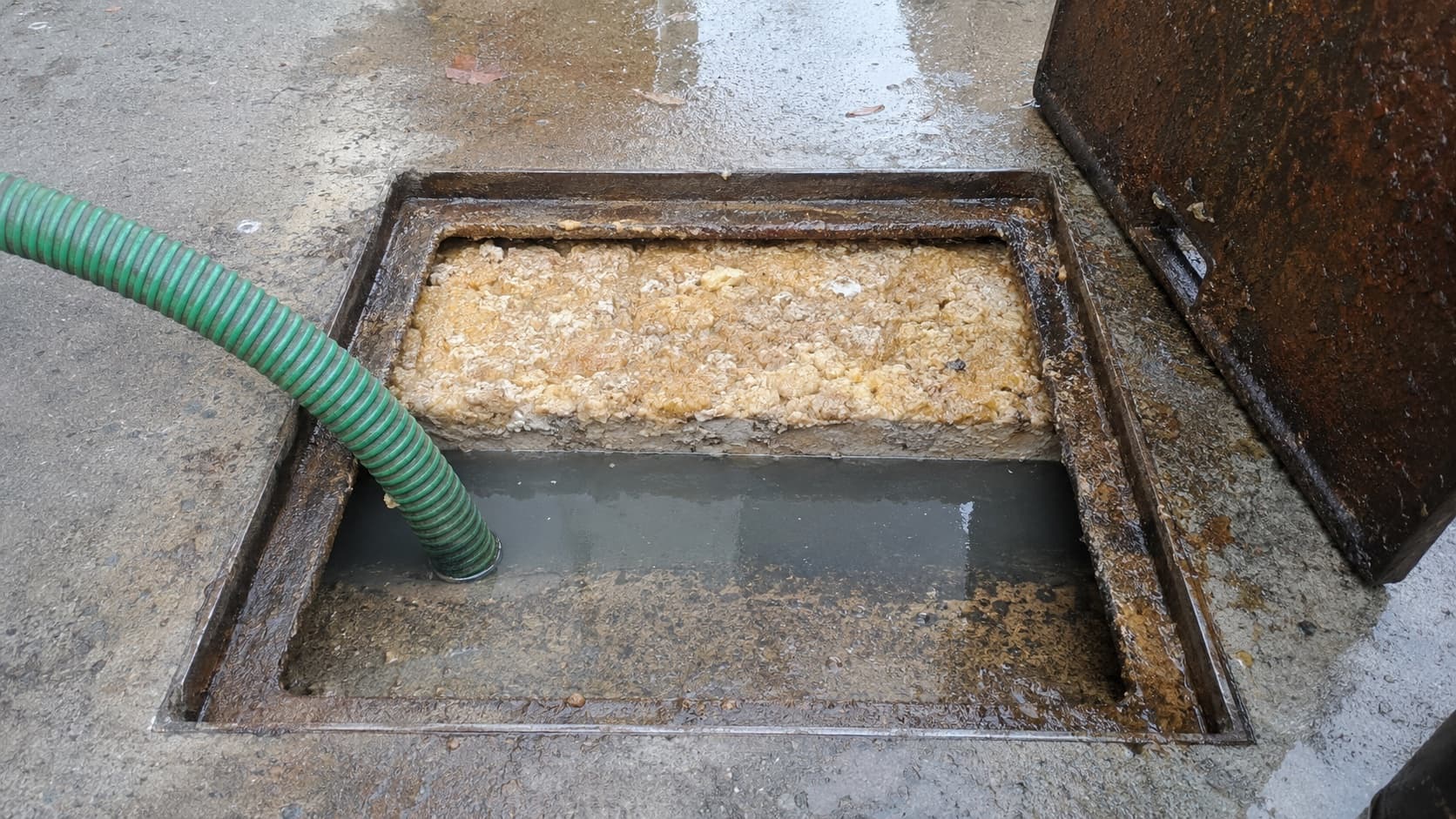
Every commercial kitchen sends a river of fats, oils, and grease down the drain: fryer splatter, pan drippings, the film off every plate and pot. Plumbers and inspectors call it FOG, for fats, oils, and grease. Poured down warm, FOG looks harmless, but once it cools it hardens and clings, and if it reaches the public sewer or your septic system it causes exactly the kind of blockage that shuts a kitchen down. A grease trap, sometimes called a grease interceptor when it is a larger in-ground unit, exists to catch that FOG before it ever leaves your building.
The way it works is quietly clever. Wastewater from your sinks and dishwasher flows into the trap and slows down. Given a moment to sit still, the grease floats to the top as a thick layer, heavy food solids sink to the bottom, and only the clear water in the middle passes out through the outlet to the sewer or septic line. The trap holds the grease and solids back so they can be pumped out, instead of hardening somewhere downstream where they cause a real problem. The cutaway below shows how the layers separate inside the trap.
Grease floats, food solids sink, and only clear water flows out. Once the trapped FOG and solids fill about one quarter of the trap, it stops separating properly and needs to be pumped.
Why the city and the health inspector both care
A grease trap is not just kitchen housekeeping. It is usually a code requirement, and it is one of the things a health inspector and your local sewer district genuinely pay attention to. When traps across a town are neglected, the hardened grease builds up in the public sewer mains and causes sanitary sewer overflows, which is why most municipalities require food service businesses to keep their traps pumped and to hold records proving it.
That is the part that catches owners off guard. It is not only about your own drains backing up. Many local ordinances require a grease trap to be cleaned on a set interval, commonly at least once every ninety days, and they expect you to keep the pumping manifests on file to show it was done and where the waste went. A missing record or an overfull trap can turn into a citation, and in a bad case a temporary closure until it is resolved. A good hauler takes the waste to an approved disposal facility and hands you documentation for your compliance file, so that box is checked before the inspector ever asks.
One more note for the many rural kitchens out here that run on septic rather than city sewer: your grease trap is protecting an even more expensive asset. Grease that slips past a neglected trap and reaches a septic drain field can clog the soil for good, and replacing a commercial drain field is one of the largest repairs a property can face. The trap is cheap insurance on the part you cannot easily replace.
How often should a grease trap be pumped?
Here is the rule that answers almost every question about grease trap service, and it is worth committing to memory. A trap should be pumped before the combined grease and solids reach about one quarter of its total capacity. Past that point, the trap can no longer hold the layers apart, and FOG starts slipping through to the sewer or septic exactly as if the trap were not there. This is the industry standard many local rules are built around, and it is why a set-it-and-forget-it schedule works so well.
How quickly a trap reaches that quarter-full mark depends on your kitchen. A high-volume kitchen with fryers running all day fills a trap much faster than a bakery or a bar that serves light food. Size matters too: a small under-sink trap fills quickly and may need monthly attention, while a large in-ground interceptor holds far more and is often on a quarterly schedule. The chart below shows typical intervals by kitchen type. Think of them as a starting point; the exact right frequency for your trap comes from a visit or two.
How long a trap takes to reach the one-quarter-full mark depends on how much grease your kitchen produces. These are typical starting points, not hard rules; the right schedule is tuned to your actual trap.
Typical months between pump-outs
What happens when a trap gets ignored
A grease trap almost never fails suddenly out of nowhere. It fails slowly and predictably, and every step along the way is a chance to catch it. Here is the chain of events when a trap goes too long without service, and the whole point of a schedule is to stop it at step one.
None of this is meant to alarm you, because it is so easily avoided. A trap that gets pumped on time simply never travels down this path. But it helps to see where the road goes, because the cost and the disruption climb fast once the grease has nowhere left to go.
The trap passes one quarter full
Grease and solids fill past the point where the trap can separate them, and FOG begins slipping toward the outlet.
Drains slow and odors start
Sinks empty sluggishly, the dish machine backs up, and a sour smell drifts out from the drains during service.
A backup hits mid-service
The line clogs at the worst possible time, water rises in the sinks or onto the floor, and the kitchen has to stop.
Compliance and health risk
An overfull trap with no recent pumping record is a citation waiting to happen, and standing wastewater is a health-code problem.
Downstream damage
Grease reaches the sewer main or the septic drain field, turning a routine pump-out into a far larger and pricier repair.
Scheduled service versus the emergency call
Emergency grease trap pumping exists for exactly those days. But any honest hauler will tell an owner the same thing: the emergency call is the most expensive and most stressful way to handle a grease trap, and it is almost entirely avoidable.
When you are on a schedule, a pump-out is a calm, planned visit at a time that suits your kitchen, often before you open or after you close, at a price you can budget for. When you wait for a backup, you are paying premium rates for an after-hours crew, you may lose a service or send diners home, and you are exposed to a compliance problem on top of it all. The chart below lays out how those paths compare, not in exact dollars, but in the cost and disruption that actually hit your business.
The same trap, two very different days. A standing schedule keeps you at the calm, low-cost end and off the health inspector's radar.
Relative cost and disruption (higher is worse)
Where Quick Pump and Clean fits in
Grease trap service is one of the least glamorous parts of running a kitchen, and that is exactly why it should be somebody else's job to remember. Grease is hauled and disposed of differently from septic waste, so Quick Pump and Clean is adding a truck equipped for it. Once it is in service we plan to pump and clean grease traps and in-ground interceptors of every size, from a small under-sink unit to a large exterior tank, with the documentation your compliance file needs.
We are not booking grease trap jobs yet, emergencies included. If your trap needs service now, call a grease hauler who can come today, and keep this guide for setting up a schedule.
Today we pump septic tanks for homes and businesses across Greene, Owen, Monroe, Lawrence, Martin, and Daviess counties. Call (812) 272-1803 and we will put your kitchen on the list and reach out when grease service starts.
Frequently Asked Questions
How often should a commercial grease trap be cleaned?
The standard rule is to pump the trap before the combined grease and solids reach about one quarter of its capacity. In practice that means roughly monthly for a small under-sink trap or a high-volume, fryer-heavy kitchen, and about every one to three months for a typical full-service restaurant. Large in-ground interceptors are often on a quarterly schedule. Many local ordinances also set a minimum interval, commonly at least once every ninety days. A hauler can set the right frequency for your specific trap after a visit.
How much does grease trap cleaning cost?
It depends mainly on the size of the trap or interceptor and how much grease and solids have built up, so the honest answer is that it is quoted per kitchen. What holds everywhere is that a scheduled pump-out on a maintenance plan is far cheaper and less disruptive than an after-hours emergency call.
Do you offer emergency grease trap pumping?
Not yet. Quick Pump and Clean is not booking grease trap work until our truck equipped for grease is in service, so for a backup today, call a grease hauler who can come now. Once the emergency is handled, a regular schedule is the way to keep it from happening again.
What is the difference between a grease trap and a grease interceptor?
They do the same job of separating fats, oils, and grease from your wastewater; the difference is mainly size and location. A grease trap is typically a smaller unit installed indoors under or near a sink, while a grease interceptor is a larger tank, often installed in the ground outside the building, used by higher-volume kitchens. Both need it, and the maintenance principle is identical: pump it before it reaches about a quarter full.
Do you provide documentation for grease trap compliance?
Yes. A licensed hauler takes the grease waste to an approved disposal facility and should give you documentation of the service for your compliance records, which many municipalities require food service businesses to keep on file. Staying on a regular schedule with records in hand is the simplest way to keep the health inspector and the sewer district satisfied.
Ready to schedule service?