October 17, 2026 · 8 min read
Fall Is the Smartest Time to Pump Your Septic Tank

By Luke Aliano
Co-Owner, Quick Pump and Clean
There is a quiet rhythm to the septic calls we take through the year, and if you have done this as long as we have, you can almost set a clock by it. Spring brings the systems that struggled through a wet winter. Summer brings the backyard parties and the full houses. And every single January, without fail, the phone rings with holiday backups and tanks that picked the coldest week of the year to remind their owners they were overdue.
Here is the good part: almost none of those winter calls had to happen. The tank was going to need pumping either way, and the timing was the only thing the owner got to choose. That is the whole case for fall. If your tank is anywhere close to due, the stretch from September to November is the smartest window on the calendar, and this guide walks through why. We serve Greene, Owen, Monroe, Lawrence, Martin, and Daviess counties, and we would much rather see you on a calm fall afternoon than a frozen holiday morning.
Why the timing of a pump-out matters at all
A pump-out is a pump-out in any season, so it is fair to ask why the month should make a difference. The answer is not about the tank. It is about everything around the tank: the weather, the ground, and the way your household uses water. Those three things swing hard between a mild October and a frozen, company-filled December, and together they decide whether your service is a simple scheduled visit or a stressful emergency.
Think of it the way you think about a roof or a furnace. You would rather have the work done on a clear day than in the middle of the storm it was meant to protect you from. A septic tank is no different. Pump it while the weather is easy and the house is quiet, and you have taken the single biggest variable, timing, off the table before winter ever tests it.
Reason one: you get ahead of the holiday surge
The holidays are the hardest stretch of the year on a septic system, and it is not close. A house that normally runs four people suddenly runs ten. There are back to back showers, loads of laundry for the guest beds, a dishwasher running every night, and a kitchen turning out big meals. All of that water and waste hits the tank in a short window, and if the tank was already near full, that surge is exactly what tips it over into a backup.
The chart below is roughly how our backup calls land across the year. The peak in winter and around the holidays is no accident. It is the surge meeting a tank that was already overdue. Pumping in the fall empties the tank before the company arrives, so your system has all the room it needs for the busiest weeks of the year.
Backup calls climb in winter and around the holidays, when a full house meets a tank that was already due. Fall, highlighted, is the window to get ahead of it.
Relative share of the backup calls we take
Reason two: the ground is easy to work before it freezes
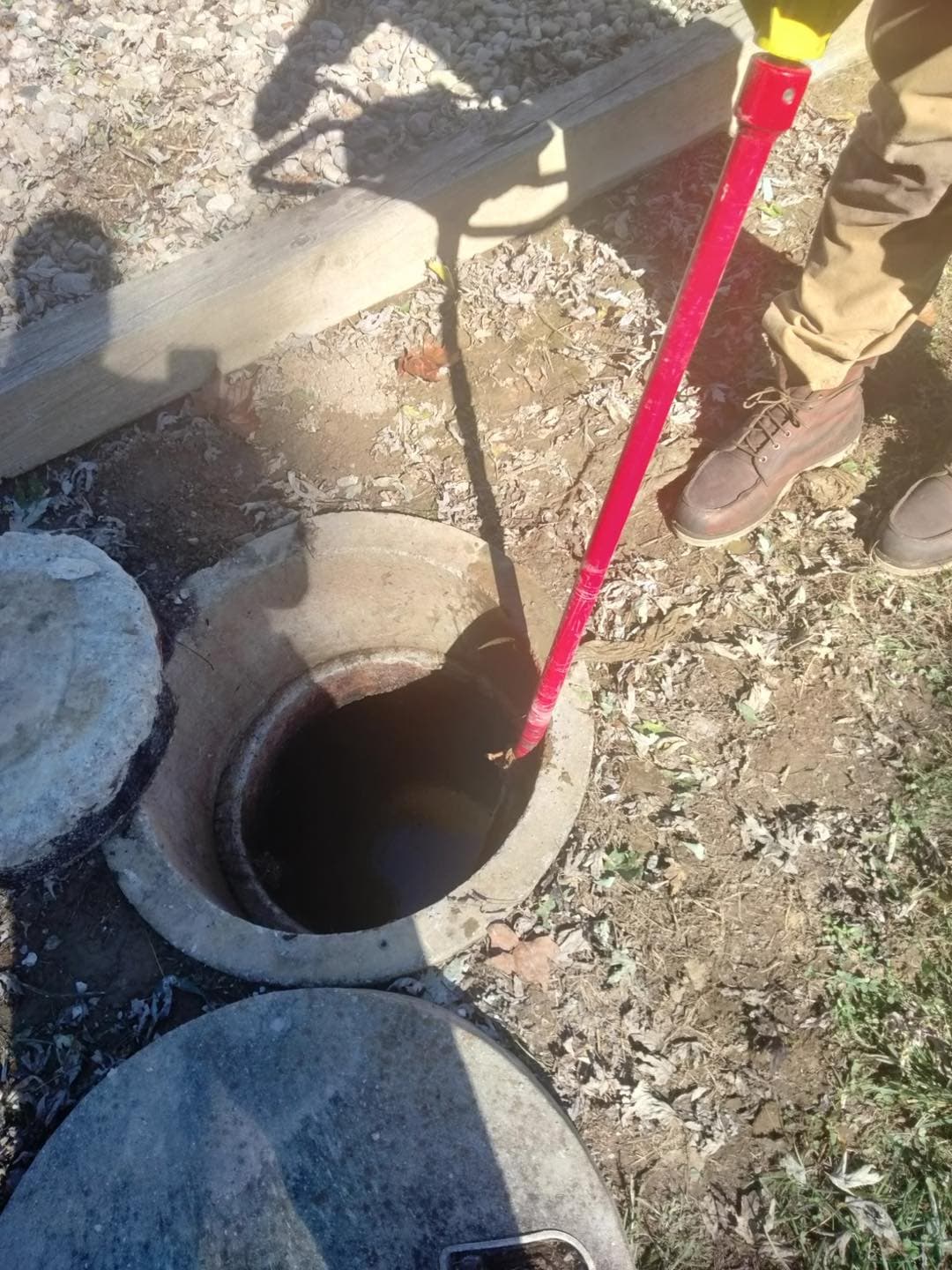
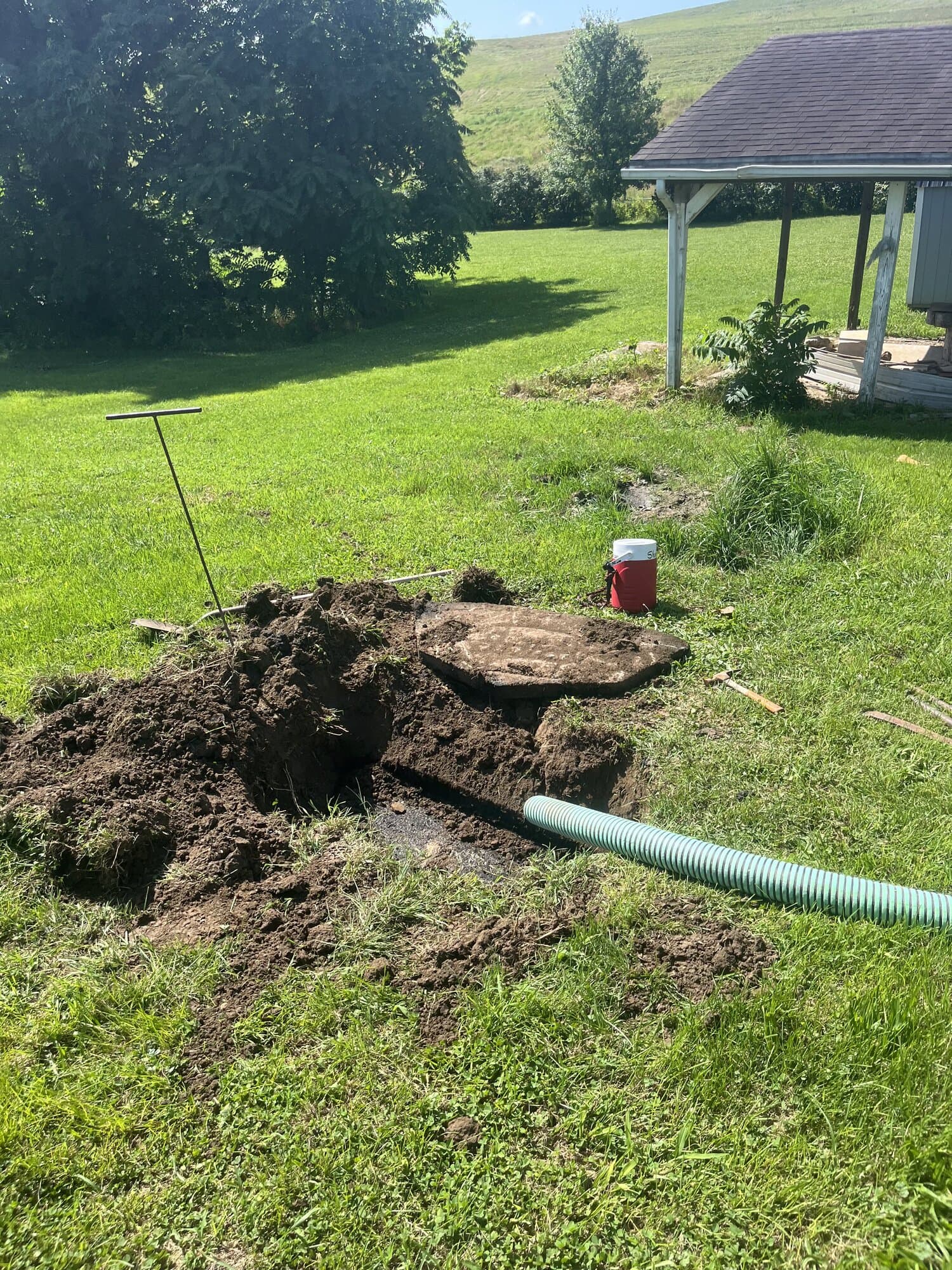
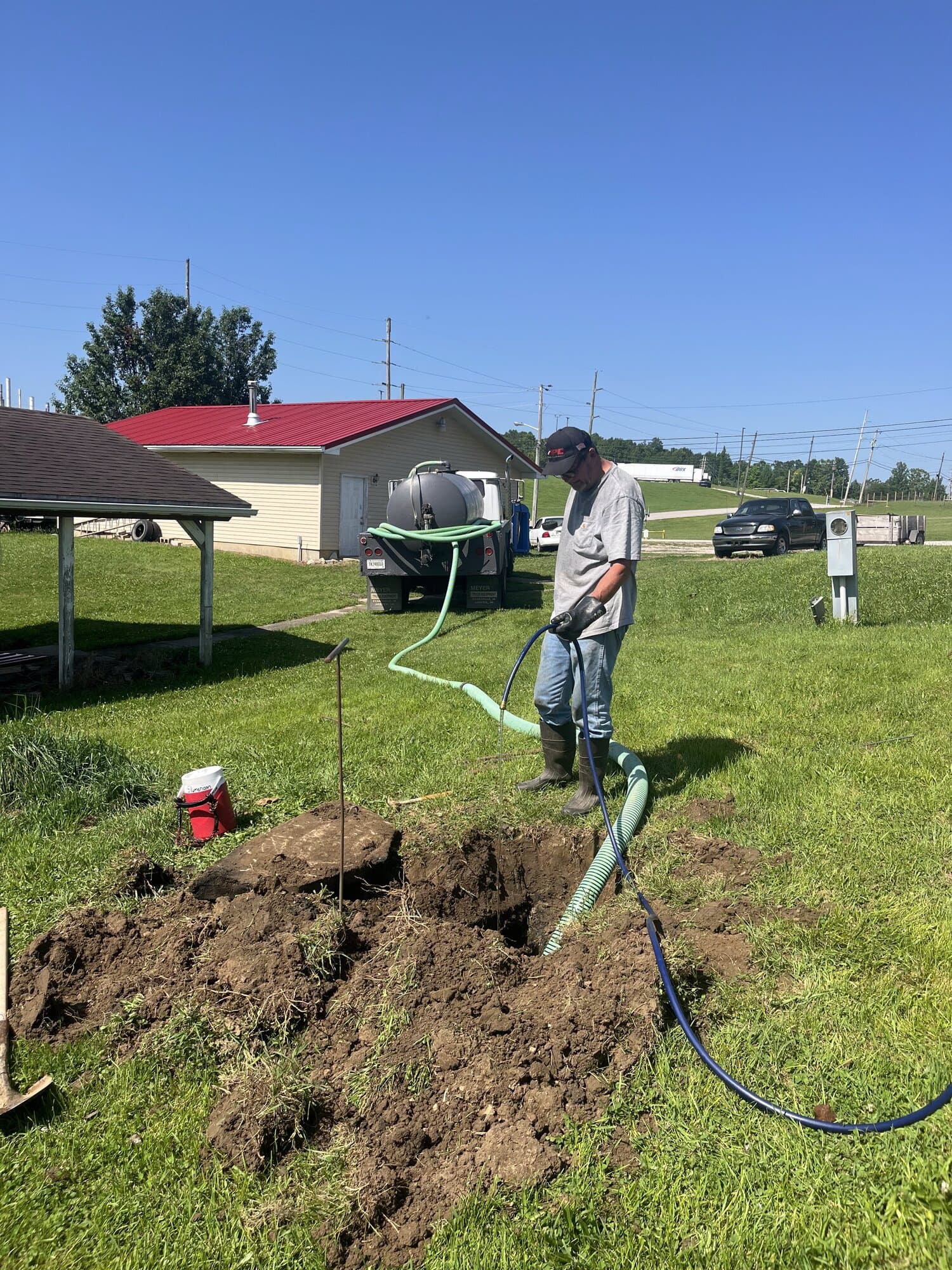
To pump a tank, we have to get to its lid. On a lot of the rural properties we serve, that lid sits under a few inches to a couple of feet of soil, and in the fall that soil is soft and easy to move. Once the ground freezes hard in December and January, uncovering a buried lid turns a quick job into a slow, stubborn one, and a fresh snow on top hides the spot entirely.
Fall is also the time to do yourself a small favor and pin down exactly where your tank and its lid are. Mark it, measure from a fixed point like a corner of the house, or have us map it while we are there. When you know where the lid is, a future visit starts fast in any season, and you are not out in the yard in January guessing under the snow.
Reason three: you head off the winter freeze risk
Cold does its own kind of damage to a septic system, separate from the holiday surge. The pipes running to and from the tank can freeze, especially if a system sits unused during a cold snap or if a component is already sluggish. A tank that is backed up going into a freeze is a much bigger headache than one that is empty and flowing, because now you are fighting a blockage and frozen ground at the same time.
Getting the system pumped and flowing in the fall is the cleanest way to avoid all of that. An empty, healthy tank handles winter far better than a full, struggling one. And if we spot a slow drain or a filter that needs attention while we are out, fall is the time to fix it, on a mild day, instead of discovering it the morning the temperature drops.
Your simple fall checklist
None of this has to be complicated. A short list, done once in the fall, sets your system up for an easy winter. The steps below are the whole routine, and most of them we can knock out in a single visit.
Pump the tank if you are due
Most households need it every 3 to 5 years. If it has been longer, this is the year.
Have us rinse the effluent filter
We do it for free on every visit, and a clean filter is one less thing to freeze up.
Mark the lid before the snow
Measure from a fixed point so a winter visit starts fast instead of with a shovel search.
Fix slow drains now, not in January
A small issue on a mild day beats an emergency on a frozen one.
Plan to spread out holiday water use
Space out laundry and long showers when the house is full to ease the surge.
Get on the fall schedule
If it has been three to five years since your last pump-out, or you honestly cannot remember the last one, fall is your window. Call us and we will get you on the schedule while the weather is still easy. We pump the tank, rinse your effluent filter for free, check the inlet and outlet baffles, and confirm the system is flowing before we leave. You head into the holidays with nothing to worry about below ground.
We serve homeowners across Greene, Owen, Monroe, Lawrence, Martin, and Daviess counties in Southern Indiana. Call us at (812) 272-1803 to book your fall pump-out. Can't flush? Call us. This is the year you call before you have to.
Frequently Asked Questions
Is fall really a better time to pump my septic tank?
If your tank is close to due, yes. The pump-out itself is the same in any season, but fall gives you soft ground before the freeze, a quiet house before the holidays, and an empty tank going into the hardest stretch of the year. It turns what could be a January emergency into a calm, planned visit.
How often should I pump in the first place?
For most households in our area, every 3 to 5 years, with the exact interval depending on your tank size and how many people live in the home. When we pump, we will look at your real sludge levels and recommend a schedule that fits your household, so the next visit is a planned one.
Why do septic backups spike around the holidays?
A full house sends a surge of water and waste through the system in a short time, and cold ground and pipes give it less room to move. If the tank was already near full, that surge is what pushes it into a backup. Pumping in the fall empties the tank before the company arrives.
Can a septic system really freeze?
Yes. Pipes and components can freeze in extreme cold, especially if the system sits unused or a part is already sluggish. Keeping water flowing, fixing leaks, and leaving insulating snow or mulch over the lines all help, and going into winter with an empty, healthy tank helps most of all.
What if I do not know where my tank lid is?
That is common on older rural lots, and we can help. We locate the tank and its lid, and fall is the ideal time to do it while the ground is soft and before snow hides the spot. Once it is marked, every future visit starts fast. Ask us about tank locating when you call.
It has been more than five years. Is that a problem?
It is not a reason to panic, but it is a good reason to call now rather than wait. A tank that has gone long is exactly the kind that backs up during holiday use. Getting it pumped this fall clears the built-up solids and takes the risk off the table before winter.
Ready to schedule service?