July 19, 2026 · 9 min read
Protect the Most Expensive Part of Your Septic System: Your Drain Field

By Luke Aliano
Co-Owner, Quick Pump and Clean
There is one part of your septic system that quietly does the hardest work, costs the most to replace, and gets the least attention. It is the drain field, the network of buried pipes and gravel trenches that returns treated water to the soil. You cannot see it, you rarely think about it, and that is exactly why it is worth a few minutes of your time.
Here is the good news, and it is really the whole point of this guide. A drain field almost never fails on its own. It fails because of what happens upstream in the tank, and that part is completely in your control. Protect the tank and you protect the field. Let me walk you through how it works, what goes wrong, and the handful of easy habits that keep the priciest part of your yard healthy for decades.
The part of your system you never see
Your septic system has two big pieces. The tank holds wastewater and lets solids settle out, and the drain field takes the clarified liquid that leaves the tank and lets it soak safely back into the ground. The tank gets all the attention because it is the part we open and pump. The drain field is the silent partner, buried a foot or two down and spread across a good chunk of your yard.
Here is why it matters so much. Pumping a tank is a routine, affordable service. Replacing a drain field is one of the largest repairs a rural property can face, often running well into five figures once you add up excavation, new pipe and stone, permits, and putting the yard back together. The chart below sets the two side by side, and that gap is the entire reason we tell every customer to stay on a pumping schedule.
A pump-out is a small, predictable cost. A failed drain field is one of the largest repairs a rural home can face. Staying on schedule is what keeps you on the left end of this chart.
Typical cost in Southern Indiana (USD)
How a healthy drain field does its job
When your system is working the way it should, only clear liquid ever leaves the tank. Solids stay behind, either floating as a scum layer on top or settled as sludge on the bottom, and the calm middle layer of clarified water is what flows out to the field.
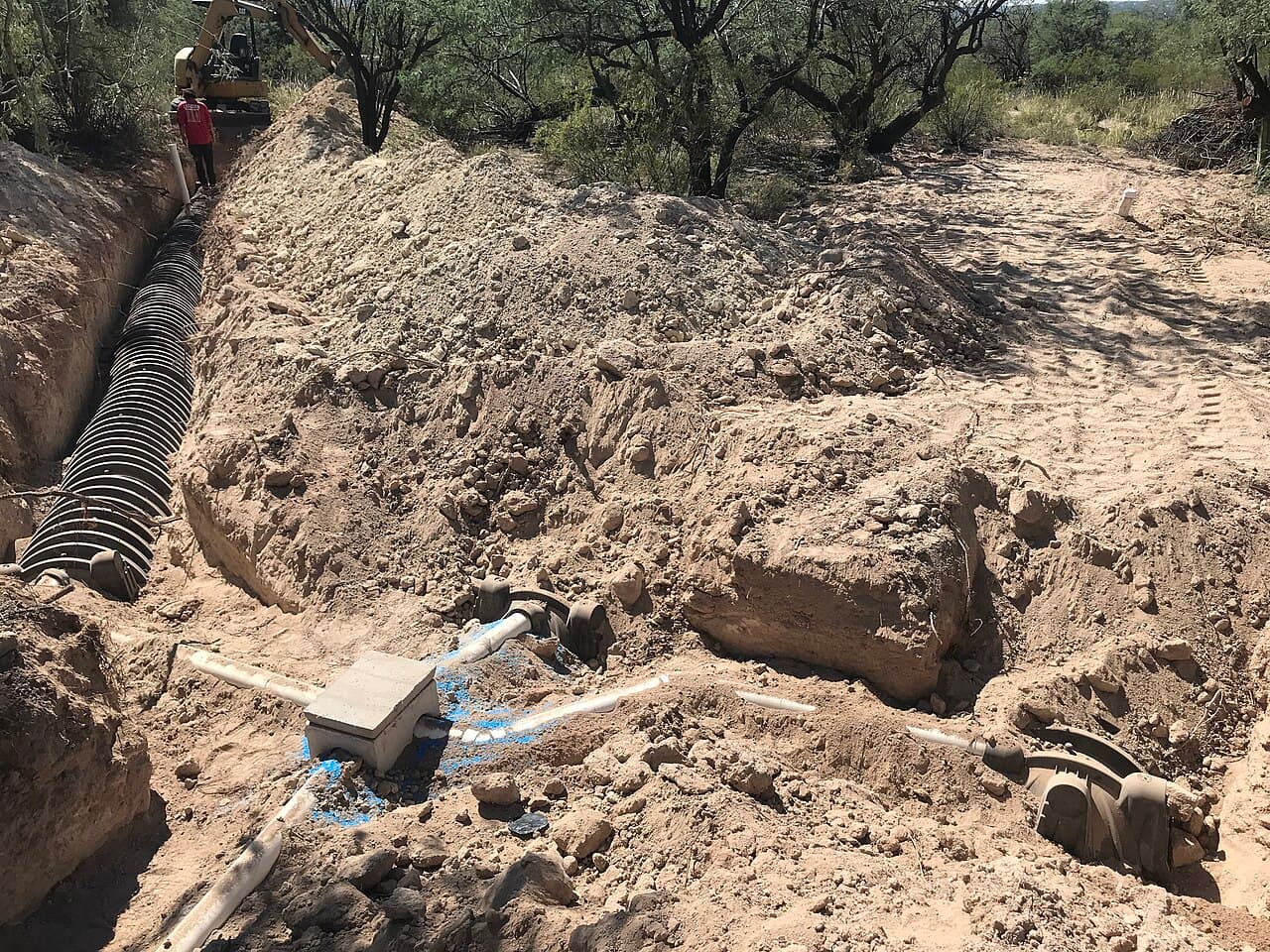
Out in the field, that liquid runs through perforated pipes laid in trenches of gravel, then trickles down into the soil. The soil is the real treatment plant. Countless natural organisms in the top few feet of earth finish cleaning the water before it rejoins the groundwater. For that to keep working, the soil has to stay open and porous, full of the tiny gaps that let water move through it. The photo at the top of this article shows a field mid-installation, before the trenches are covered, so you can see the pipe and stone that do this quiet work.
How a neglected tank quietly kills the field
A drain field rarely dies from old age. It dies because solids reach it, and solids only reach it when the tank has been ignored for too long. Here is the chain of events we see on failed systems, and every link in it is preventable.
Once solids seal the soil, there is no reviving it with a pump truck. The pores are closed, the water has nowhere to go, and the only real fix is a new field. That is why a $300 pump-out is not really about the tank at all. It is cheap insurance on the buried asset you cannot replace on a small budget.
The tank fills past its limit
With no pump-out, the scum and sludge layers grow until there is little clear space left in the middle of the tank.
Solids slip past the outlet
With nowhere left to settle, grease and fine solids push past the baffle and flow out toward the field.
The soil begins to clog
Those solids reach the trenches and seal the pores in the soil, the tiny gaps that water needs to drain away.
Water backs up or surfaces
With the soil sealed, effluent has nowhere to go. It backs up toward the house or shows up as soggy ground and odor in the yard.
The field fails for good
Once the soil is sealed, no pump truck can reopen it. A new drain field becomes the only real fix, and it is the priciest job in the yard.
The simple habits that keep a field healthy
Protecting the field is mostly about respecting the ground above it and being kind to the tank below it. A few easy habits do almost all the work.
Keep weight off it. Do not park vehicles, drive equipment, or set a pool or shed on top of the drain field. The soil needs to stay loose, and compaction crushes the very pores that let water drain.
Mind what you plant. Grass over a drain field is perfect. Trees and large shrubs are not, because their roots go looking for moisture and can invade and clog the pipes. Keep the deep-rooted plants well clear of the field.
Send rainwater elsewhere. Point roof downspouts, sump pumps, and surface runoff away from the field. A field that is already soaking up a rainstorm has no room left for your household water.
Go easy on the tank. Everything that protects the tank protects the field: keep grease, wipes, and harsh chemicals out of the drain, spread laundry across the week instead of many loads in one day, and let the effluent filter catch stray solids. We rinse that filter for free on every pump-out.
The one habit that matters most
If you do only one thing for your drain field, pump the tank on a sensible schedule. Everything else on the list helps, but a routine pump-out is the single action that keeps solids where they belong and away from the soil.
For most Southern Indiana households, that means a pump-out every three to five years, sooner for a big family or a smaller tank. The right interval depends on your tank size and how many people live in the home. When we pump, we also get eyes on the tank, check the baffles that keep solids out of the field, and clean that effluent filter, so you leave the visit knowing the whole system is in good shape.
Where we come in
The drain field is the part of your system you never think about until it is too late, but keeping it healthy is refreshingly simple. Respect the ground above it, be mindful of what goes down the drain, and pump the tank on schedule. Do those things and your field can last for decades, quietly returning clean water to the soil the way it was built to.
If it has been more than a few years since your last pump-out, or you are not even sure where your tank is, we are glad to help. We will pump the tank, check the baffles, rinse the effluent filter for free, and give you an honest read on how your system is doing. No pressure and no scare tactics, just the straight advice we would give a neighbor.
We serve Greene, Owen, Monroe, Lawrence, Martin, and Daviess counties across Southern Indiana. Give us a call at (812) 272-1803, and we will help you protect the most expensive part of your yard long before it ever becomes a problem.
Frequently Asked Questions
How much does it cost to replace a septic drain field?
It is one of the largest repairs a rural home can face, commonly ranging from around $10,000 to $20,000 or more once you include excavation, new pipe and stone, permits, and restoring the yard. The exact figure depends on your soil, the size of the field, and local requirements. That wide gap between a routine pump-out and a full replacement is exactly why regular pumping pays for itself many times over.
Can a clogged drain field be fixed without replacing it?
Sometimes, if you catch it very early. If the trouble is a full tank or a dirty effluent filter letting solids through, pumping and cleaning can relieve the field before the soil seals up. Once the soil itself is clogged, though, no pumping can reopen it, and a new field is the only lasting fix. Catching it early is everything, which is why we like to get eyes on the system during routine service.
What are the signs my drain field is failing?
Watch for soggy or unusually green patches of grass over the field, standing water or odor in that area, and slow drains or backups inside the house that a pump-out does not fully solve. If you notice any of these, call us sooner rather than later. Acting early can be the difference between a modest repair and a full replacement.
Ready to schedule service?