October 25, 2026 · 9 min read
Closing Up a Cabin or Lake House for Winter: What to Do With the Septic System

By Luke Aliano
Co-Owner, Quick Pump and Clean
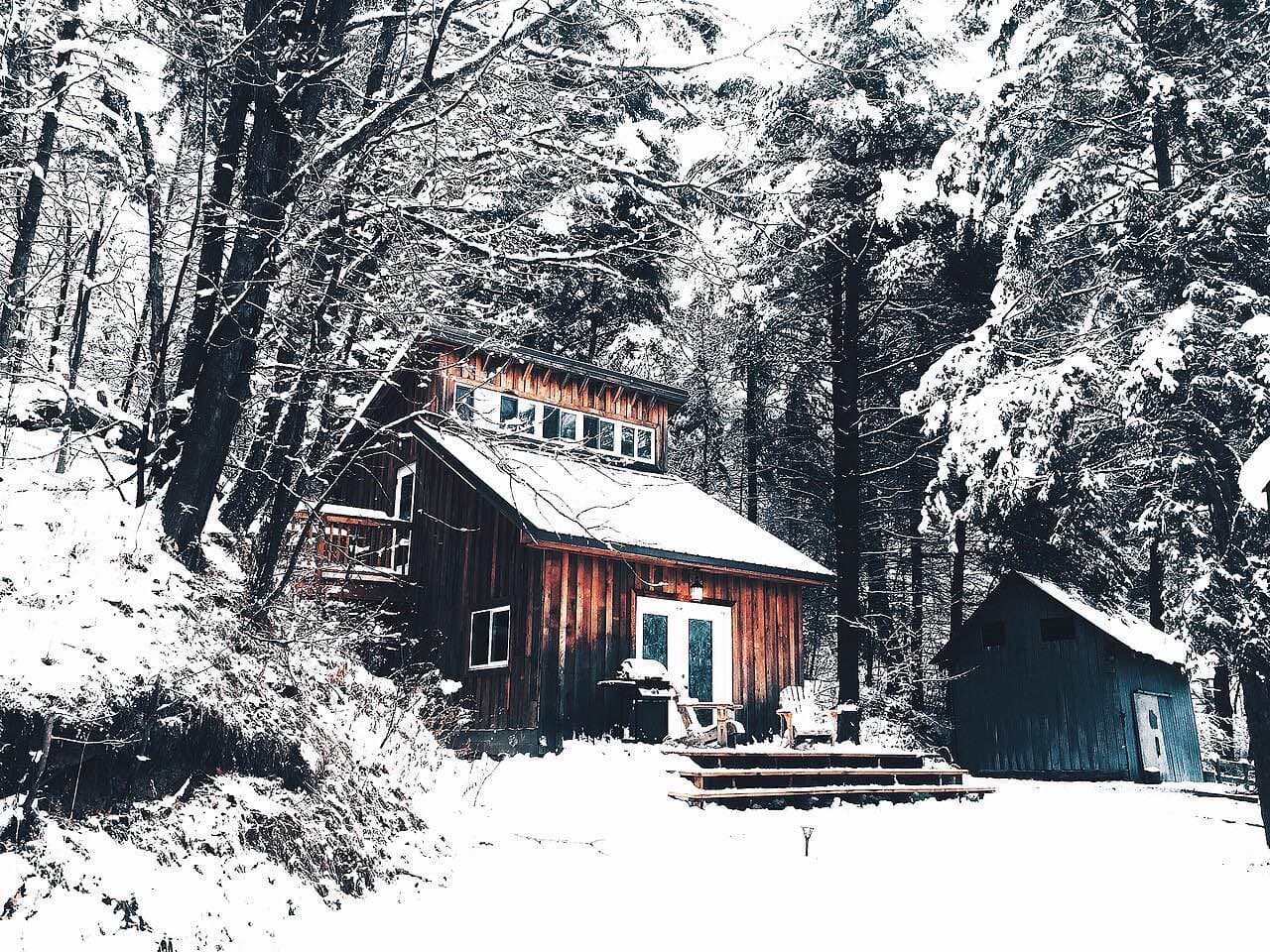
Every fall we get the same phone call from a different person. They have a cabin back in the woods off the Brown County edge, or a little place within sight of Lake Monroe, or a lake lot out in Owen or Greene county, and they are about to close it up until spring. Somewhere on their shut-down list is a line that just says "septic?" with a question mark after it.
That question mark is fair. A septic system at a house you live in gets warm water every day, and that steady flow is a big part of what keeps it healthy through a cold snap. A system at a cabin that sits locked from November to April gets nothing. This guide covers what changes when a system goes quiet, the honest answer on whether to pump before you leave (it is not a simple yes), and a shut-down list you can work through before you turn the key. The same thinking applies to short-term rentals that sit empty for weeks between winter guests.
Why an empty cabin is a different septic problem
A septic system does not make its own heat. What keeps it from freezing in a normal home is the constant trickle of warm wastewater from showers, laundry, and dishes, plus the soil cover over the tank and lines. When a house sits empty, the first of those disappears entirely. Whatever is sitting in the tank and pipes on the day you leave just gets colder, week after week, with nothing new coming in to warm it.
The University of Minnesota's onsite septic program, which knows a thing or two about cold, names four places a system commonly freezes: the pipe from the house to the tank, the tank itself (or a pump tank, if you have one), the pipe out to the drain field, and the drain field. A lived-in home rarely has trouble at any of them. A cabin left alone for months can, especially where the lines run shallow. Our winters are milder than Minnesota's, but we still get hard freezes, and a quiet system has less working in its favor when they come.
Should you pump the tank before you leave? The honest answer
You will find advice going both directions, and both sides have a point. The case for pumping comes from extension guidance written for seasonal cabins. University of Minnesota Extension suggests considering a pump-out if you are closing the cabin for winter or will only use it a few times. Their reasoning: a tank left full all winter holds sewage that just gets colder, and in a shallow tank it can even freeze. Start with an empty tank, and in spring the system fills with fresh, warm wastewater instead of pushing a winter's worth of cold water out to the field.
The case against is just as real, and it is about groundwater. An empty tank is a big hollow box in the ground. If the soil around it is saturated, water pushes up on it, and a tank that weighs less than the water it displaces can float right out of its hole. Minnesota's guidance says it plainly: in an area with a high water table, only pump out the tank if it was designed for those conditions, and it is not advisable to leave a tank empty after pumping when the soil around it is saturated. Plastic and fiberglass tanks weigh far less than concrete, so they have much less weight holding them down. A floated tank breaks its pipe connections and turns a pump-out into a repair.
So which applies to you? It depends on where the tank sits. A cabin on a dry, well drained ridge is a different situation from a lake lot near the waterline or a place in a hollow where the ground stays soggy. Our rule of thumb: if your tank is due or close to due, and it is concrete in ground that drains well, a fall pump-out before you close up is a smart move. If the tank sits low and wet, or it is plastic or fiberglass, or you do not know what it is made of, call us first. We will look at the tank and the ground around it and tell you whether pumping and leaving it empty is safe. And if your tank is nowhere near due and the cabin will see some winter use, you may not need to touch it at all.
How long the cold actually lasts here
It helps to know what your system is up against. The chart below uses the official 1991 to 2020 climate normals for Bloomington from the National Weather Service: the average overnight low by month, across the stretch when most cabins in our area sit closed.
December through February average below freezing, and November and March hover just above it, with plenty of individual nights well below. That is roughly five months where a system with no warm water coming in relies entirely on the soil and snow over it. Long enough that a little preparation in October pays for itself.
Bloomington 1991 to 2020 climate normals (National Weather Service). Highlighted months average below freezing, the stretch when a closed cabin's system gets no warm water at all.
Average monthly low temperature (°F)
Your cabin septic shut-down checklist
None of this takes long, and most of it you can do yourself in an afternoon. The order matters a little: get the tank decision made while the weather is still mild and the ground is soft, then work your way to the door.
Early to mid fall: decide on the tank
If it is due and sits in dry ground, book a pump-out. If it is low, wet, plastic, or fiberglass, have us look before anyone empties it.
Fall: fix every drip and running toilet
A slow trickle into a cold system can freeze in the line and build into a blockage. Fix it, do not leave it running.
Before the first hard freeze: cover the system
Let the grass grow long over the tank and lines and add a layer of mulch, straw, or leaves, 8 to 12 inches deep per Minnesota extension guidance.
Same day: check lids and caps
Make sure riser lids and inspection pipe caps are on tight and unbroken. An open or cracked cap lets cold air straight into the system.
Closing day: drain the plumbing, skip the additives
Never pour automotive antifreeze, salt, or septic additives down the drains. If you have an aerobic unit or a pump chamber, ask how to set it before you shut off power.
All winter: keep off the drain field
No trucks, ATVs, or plowed snow piles over the tank and field. Leave the snow where it falls; it insulates.
What not to do on your way out the door
A few habits that make sense for the plumbing inside a cabin do not make sense for the septic system outside it. The big one is leaving a faucet dripping. In a cabin on septic that sends a thin, cold trickle down the drain line all winter, exactly the kind of slow flow that freezes into an ice plug. Minnesota's septic program calls out leaky fixtures as a freeze risk for that reason. Drain the plumbing properly instead.
The second is pouring anything into the system to protect it. University of Minnesota Extension is clear: no antifreeze, salt, or septic additives. If someone else winterizes your plumbing and plans to put anything in the drain traps, ask what it is first, and never let automotive antifreeze go down a drain that empties into the ground.
Third, leave the snow over your tank and lines alone and keep vehicles off it. Snow is one of the best insulators a septic system has, and compacted, frozen soil over a drain field is easy to damage in ways you will not see until spring. Ice on the lake is pretty. Ice in your drain line is not.

Opening back up in the spring
When you come back in March or April, ease the system back into service. Turn the water on, check for leaks, and use water normally rather than running every load of laundry the first afternoon.
Watch for signs that something froze or shifted: slow or gurgling drains, sewage odor near the tank or field, wet or sunken spots in the yard. If a tank froze, the baffles inside need checking, and that is a job for someone with the lid open. Do not try to thaw a frozen line yourself with chemicals. Call us, and we will find the problem before it becomes a backup on your first weekend of the season.
Get your cabin on the fall schedule
If you own a cabin, lake house, or short-term rental in our area, now is the time to make the tank decision, while the weather is mild and the ground is soft. We will look at your tank and the ground it sits in and tell you honestly whether a pump-out before you close up makes sense. If we pump, we check the inlet and outlet baffles and rinse your effluent filter for free while we are there. Pumping starts at $300 for a 1,000 gallon tank, and if you do not know where the lid is, we can find it and dig it out too.
We serve cabin and second home owners across Greene, Owen, Monroe, Lawrence, Martin, and Daviess counties, open 7 days with same-day service when available. Call us at (812) 272-1803 before you lock the door for the season. Can't flush? Call us.
Frequently Asked Questions
Should I pump my cabin's septic tank before closing it for winter?
Often, yes, but not always. Extension guidance for seasonal cabins suggests considering a fall pump-out so the tank does not sit full of cold sewage all winter. The exception is a tank in saturated ground or a high water table, where an empty tank can float. If your tank sits low and wet, or is plastic or fiberglass, have us look at it before anyone pumps it.
Can an empty septic tank really float out of the ground?
Yes. An empty tank is a large hollow box, and saturated soil pushes up on it. If the tank weighs less than the water it displaces, it can lift, breaking its pipe connections. Lighter plastic and fiberglass tanks are more at risk than concrete. That is why pumping and leaving a tank empty in wet ground is not something to do without a look first.
Can a septic system freeze if nobody is using it?
It can. A closed cabin gets no warm wastewater at all, so the pipes, tank, and drain field rely only on the soil and snow over them. Mulch or long grass over the system, tight lids, no dripping fixtures, and no traffic on the field all help.
Should I leave a faucet dripping in my cabin over the winter?
Not on a septic system. A slow, constant drip sends a thin, cold trickle down the drain line, which is exactly the kind of flow that freezes into an ice plug. Fix leaks and drain the plumbing properly instead.
Is it OK to put antifreeze down the drains when I winterize?
Never automotive antifreeze. University of Minnesota Extension advises against adding antifreeze, salt, or septic additives to a septic system at all. If someone else winterizes your plumbing and plans to put anything in the drain traps, ask what it is before they pour it.
I rent my cabin out in winter. What changes?
A rental with guests every few weeks sits in between: cold and quiet for stretches, then a full house all at once. Keep the tank on its pumping schedule, post a short list of what not to flush, and keep guest cars off the drain field. If the tank is close to due, pump it in the fall before winter bookings start.
Ready to schedule service?